Evangelion
Hakone / Tokyo-3
A practical one-day route through the real mountain landscape behind Tokyo-3—with current locations, official stops, Lake Ashi, Owakudani, and the Evangelion store at Hakone-Yumoto.
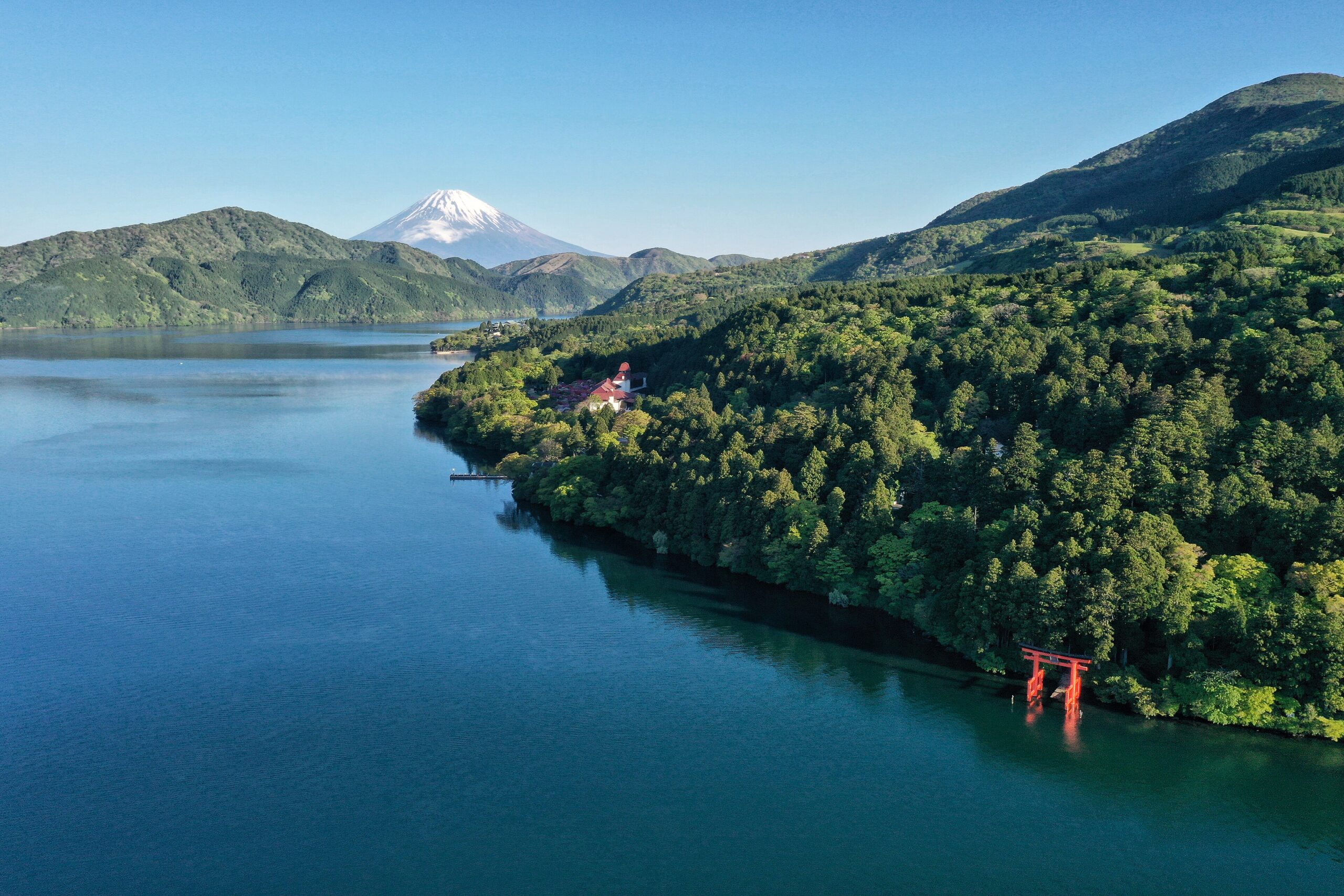
Photo: Lake Ashi, Mount Fuji, and Hakone Shrine by Charlie fong, CC BY-SA 4.0. Cropped and color-adjusted for display.
Hakone is not an Evangelion theme park. It is something more interesting: the volcanic landscape, lake, railway, and mountain geography used to imagine Tokyo-3. This guide helps you experience that geography as a real trip—not chase old decorations that may have disappeared.
Evangelion Hakone in 30 Seconds
Affiliate disclosure: This guide contains Klook affiliate links. If you book through them, Life with Saki may earn a commission at no extra cost to you. Recommendations are based on route usefulness, not commission rate.
Official Japanese Picks · CDJapan
Affiliate disclosure: Life with Saki may earn a commission from qualifying CDJapan purchases at no extra cost to you.

Neon Genesis Evangelion Blu-ray Box Standard Edition
The strongest single old-series pick: all 26 TV episodes plus Death and Rebirth, The End of Evangelion, and Revival of Evangelion in one Japanese Blu-ray box.
View the Blu-ray Box at CDJapan →

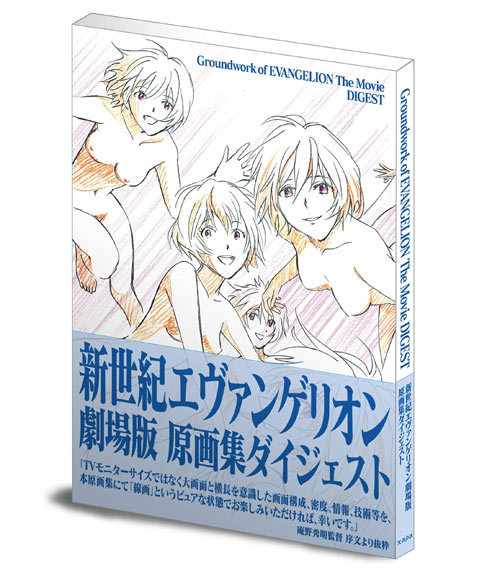
Product availability can change. Japanese Blu-rays and books may not include English subtitles or text unless stated on the product page. CDJapan promotional images are used only for these matching affiliate links.
What Still Exists—and What Ended
Hakone’s Evangelion history is long enough that old photos can be misleading. The area has hosted large transport wraps, station takeovers, voice announcements, stamp rallies, and anniversary events. Some were deliberately temporary. A useful 2026 guide must separate the permanent geography from the current licensed locations and the historical campaigns.
Plan around these
EVA-YA at Hakone-Yumoto, the Sengokuhara Outpost facility, the real railway and mountain landscape, Owakudani, Togendai, Lake Ashi, Futagoyama views, Kintoki Shrine, and the Ashinoko Skyline melody road.
Treat decoration as a bonus
Togendai remains a confirmed scene location, but statues, station panels, or NERV-themed decoration shown in older reports may be moved, replaced, or removed.
Do not promise these
The 2020 Hakone Evangelion project, themed route buses, Misato announcements, stamp events, and earlier large station wraps belong to past campaigns unless a new official notice states otherwise.
This distinction protects the trip from disappointment. If a new collaboration is running when you visit, add it to the route only after checking its dates and official conditions. Do not rebuild the itinerary around a social-media photograph with no date.
How to Reach Hakone-Yumoto from Tokyo
From Shinjuku: the simplest comfortable option is the Odakyu Romancecar to Hakone-Yumoto. It requires a basic fare or eligible pass plus a separate limited-express ticket and seat reservation. A lower-cost route uses regular Odakyu services to Odawara, followed by the Hakone Tozan line to Hakone-Yumoto, but transfers take more attention and the trip is slower.
From Tokyo Station or Shinagawa: take a Tokaido Shinkansen or JR Tokaido Line train to Odawara, then transfer to the Hakone Tozan line for Hakone-Yumoto. The Shinkansen is fast but may not offer the best total value unless it fits a larger rail itinerary. Check whether your existing rail pass covers the JR segment; the Hakone Freepass does not turn the Romancecar into a free reserved-seat service.
Aim to arrive at Hakone-Yumoto around 9:00 AM. Arriving at noon makes the full loop risky because the ropeway closes earlier than city trains, winter hours are shorter, and a missed cruise can consume a large part of the remaining daylight.
The Best 1-Day Route
Start early and move clockwise. This order puts the weather-sensitive ropeway and Lake Ashi cruise before the late afternoon, then leaves the flexible Hakone-Yumoto meal for the end.
Hakone-Yumoto + EVA-YA
Leave large luggage, visit the official store, and confirm live transport status.
Hakone Tozan Railway → Gora
Ride the mountain railway and continue by cable car to Sounzan.
Owakudani
Allow 45–60 minutes for the volcanic valley, weather, and photographs.
Togendai
Connect the confirmed Rebuild location with a practical lunch and cruise transfer.
Lake Ashi → Moto-Hakone
Watch the mountains from the water, then continue to Hakone Shrine and the Heiwa no Torii.
Bus to Hakone-Yumoto
Return for an early dinner at Hakone Curry Cocoro when its evening service is available.
Evangelion Hakone Map
Save These Stops
- EVA-YA / Hakone-Yumoto
- Gora and Sounzan
- Owakudani
- Togendai Station
- Moto-Hakone Port
- Hakone Shrine / Heiwa no Torii
The map is an orientation tool. Use the numbered route above for travel order and check official services on the day.
Why Hakone Is Tokyo-3
Official Evangelion material describes Hakone as the model for the story’s Tokyo-3 setting. The relationship is not limited to one building. The mountain basin, Lake Ashi, Owakudani, railways, and roads form the physical logic of the fictional city. That is why the journey works even when a collaboration wrap has ended.
The strongest way to experience the connection is to move through the landscape: climb from Hakone-Yumoto on the mountain railway, cross the volcanic terrain by ropeway, descend to Togendai, and look back toward the mountains from Lake Ashi. The route follows the geography rather than forcing a list of isolated pins.
Location confidence matters. This guide uses Confirmed Setting or Confirmed Scene when the relationship is supported by official Evangelion or Hakone sources. Official Collaboration means a licensed shop or facility. General Hakone attractions are described as travel additions, not falsely promoted as anime scene locations.
Stop 1: EVA-YA
えゔぁ屋 (EVA-YA) is the official Evangelion souvenir store on the first floor of Hakone-Yumoto Station. It is the cleanest bridge between the franchise and the real destination, so visit it before beginning the mountain loop.
The shop focuses on Hakone-exclusive and Japanese-style goods. The official store also highlights themed takeaway items such as EVA-01-colored soft serve and an L.C.L.-inspired drink, although flavors and daily availability may change.
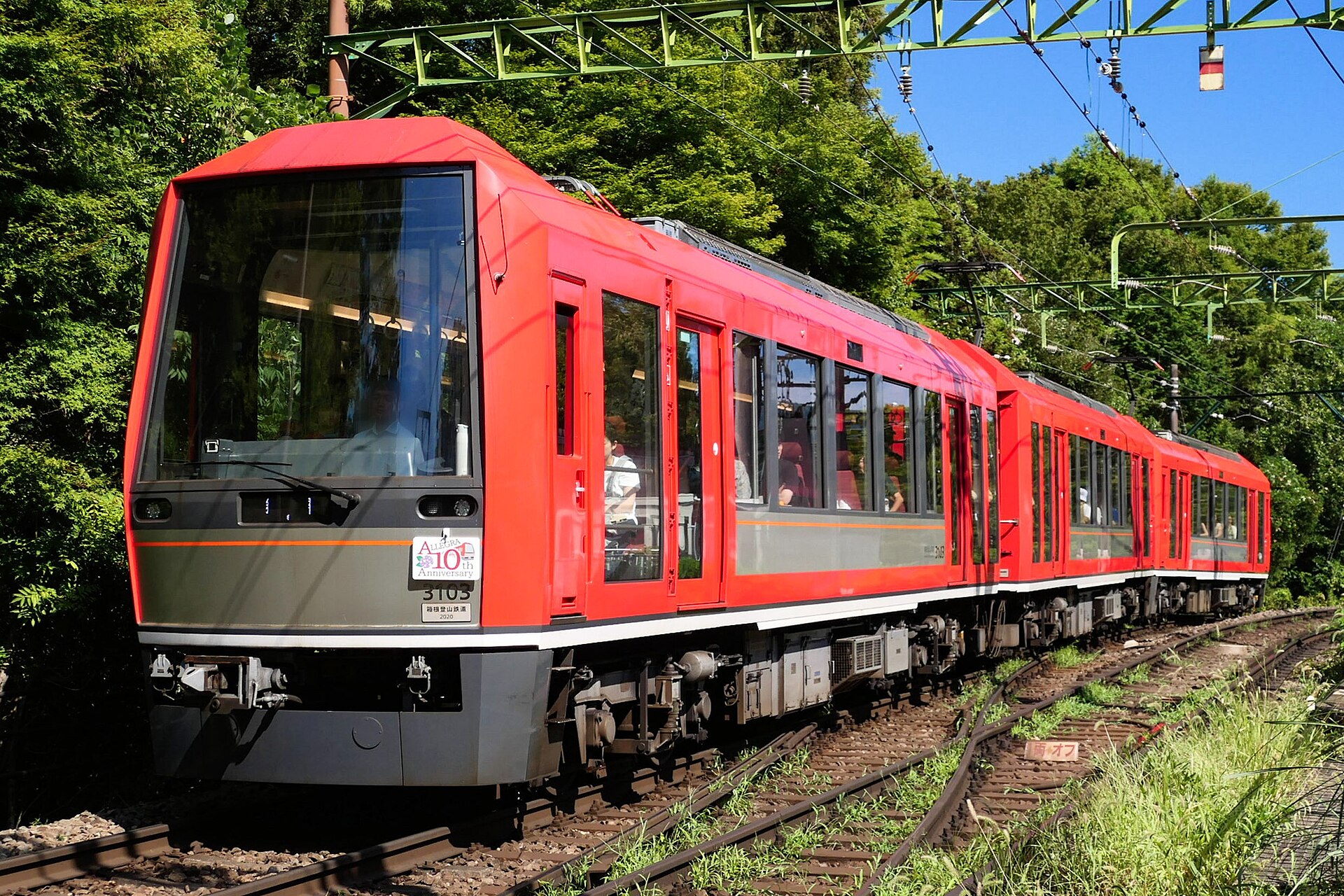
Photo: Hakone-Tozan Series 3100 by MaedaAkihiko, CC0 1.0.
Hakone Tozan Railway
EVANGELION: 1.0 CONNECTIONThe official Evangelion Hakone report explicitly connects the Hakone Tozan Railway with Evangelion: 1.0 You Are (Not) Alone. Even without a themed train, the ride is part of the pilgrimage: the line climbs sharply through forested valleys and uses switchbacks to gain elevation.
What to notice: the change from hot-spring town to steep mountain terrain, the slow switchbacks, and the sense of entering a defended basin rather than arriving at a conventional city.
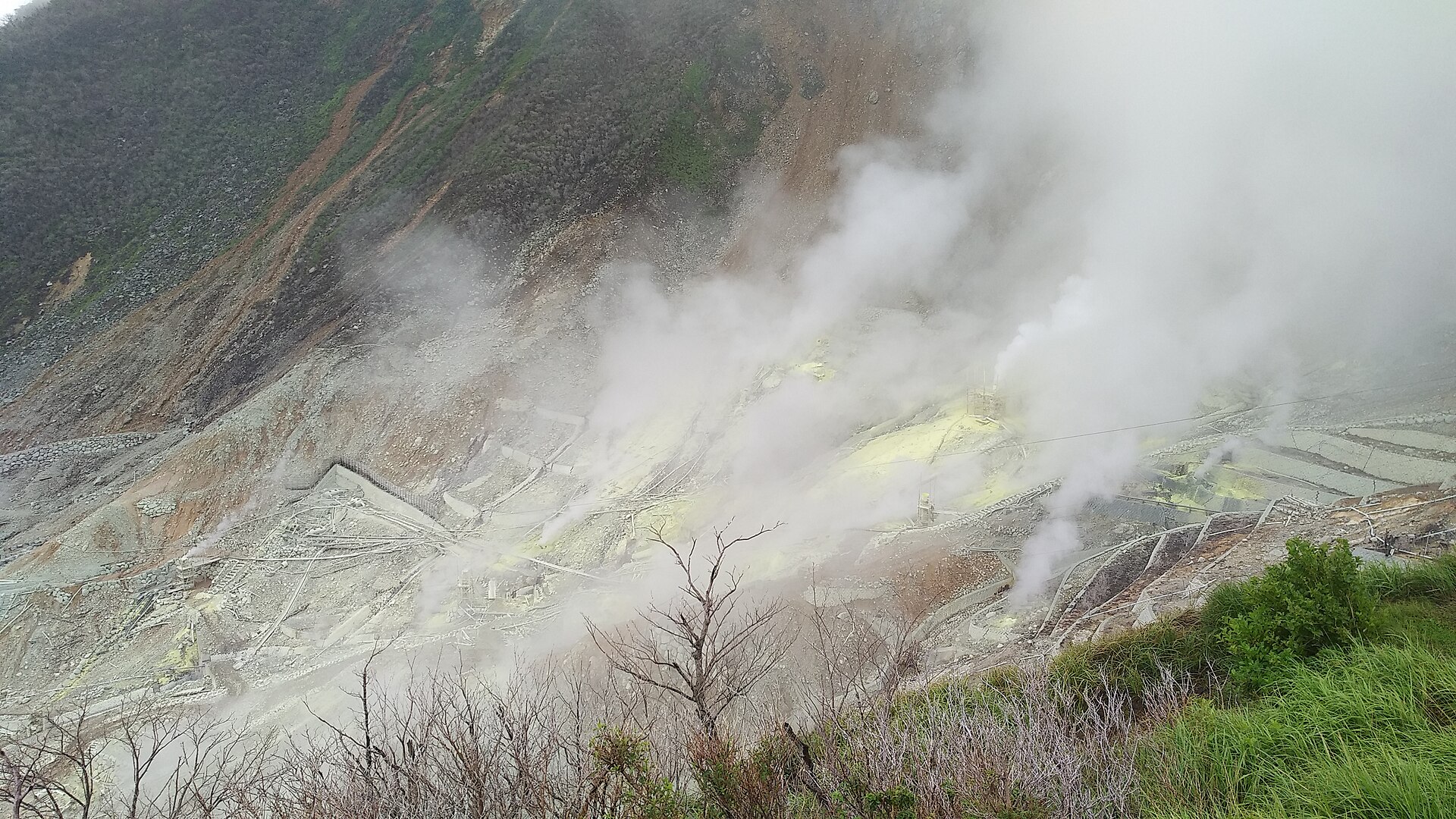
Photo: Owakudani, Hakone July 2018 by Alvinz, CC0 1.0.
Owakudani
VOLCANIC LANDSCAPEOwakudani is one of the clearest places where the real Hakone landscape feels compatible with Evangelion’s world. Steam rises from the active volcanic valley, ropeway cabins cross the terrain, and the weather can shift quickly. Hakone’s official English guide also identifies Owakudani as a place that appears in the series.
Allow time for the observation areas and the famous black eggs, but keep the day moving. The most important logistical decision is whether the ropeway is operating through to Togendai.
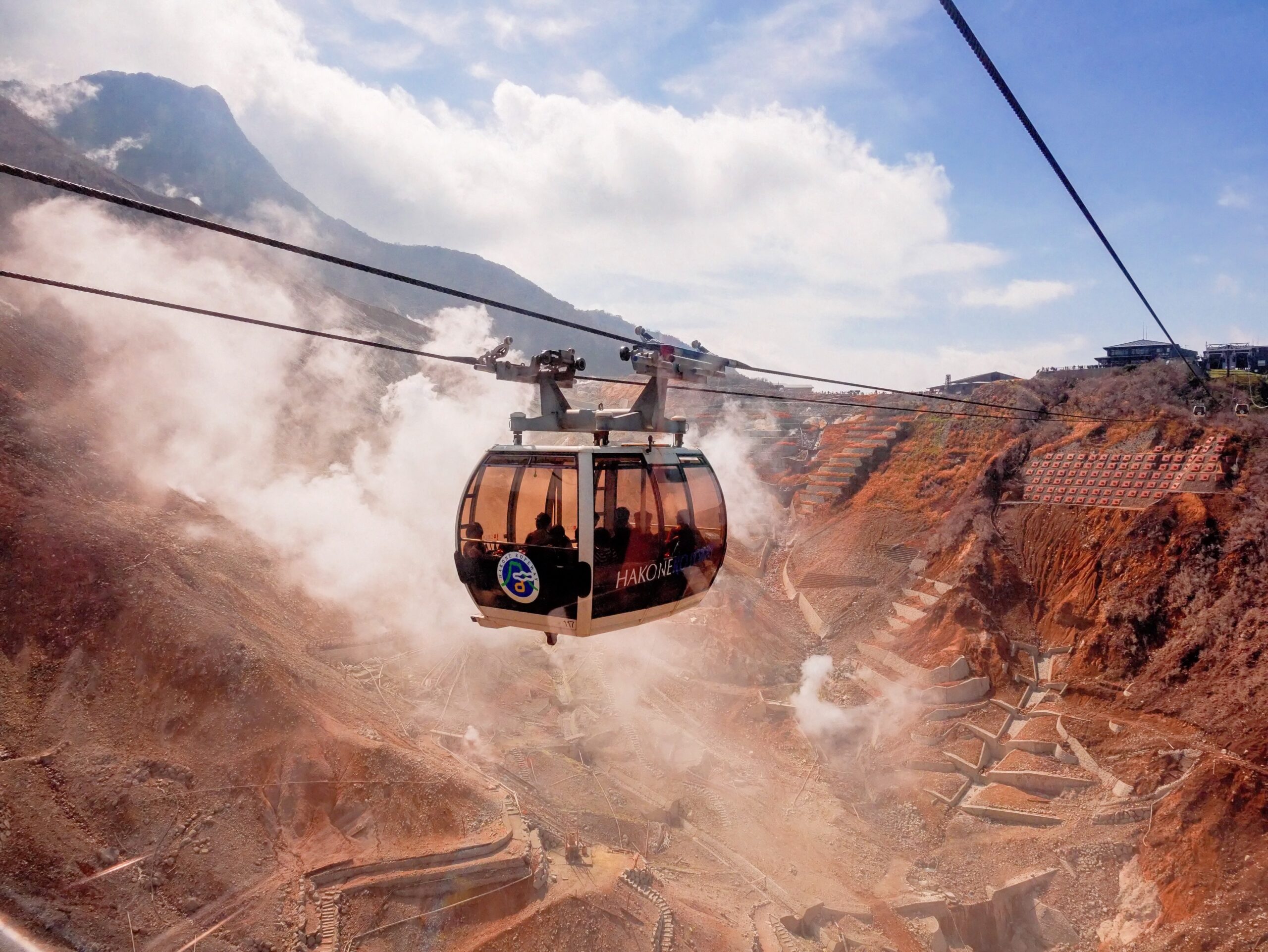
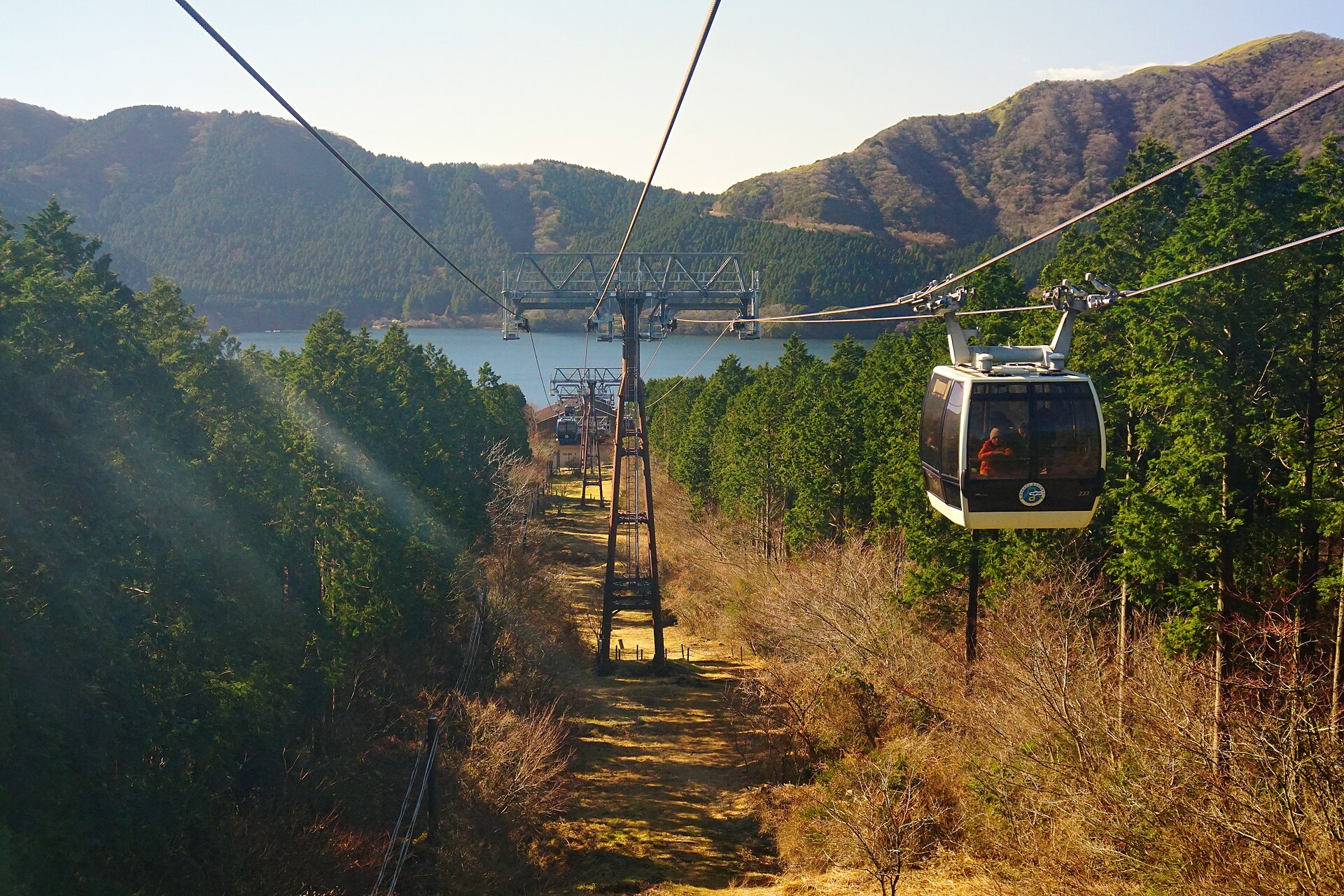
Photo: Togendai Station Hakone by 663highland, CC BY-SA 3.0. Resized by WordPress.
Togendai
EVANGELION: 2.0 CONNECTIONThe official Evangelion report identifies Togendai as the place where Shinji and Kaji first meet in Evangelion: 2.0 You Can (Not) Advance. For travelers, it is also the route’s most useful transfer point: the ropeway, Lake Ashi cruise, bus services, restaurant, and waiting areas meet in one building.
That makes Togendai a good lunch stop. Use the time to check the next cruise departure before ordering. If your connection is close, buy a quick meal rather than losing the boat and compressing the rest of the afternoon.
Lake Ashi and Futagoyama
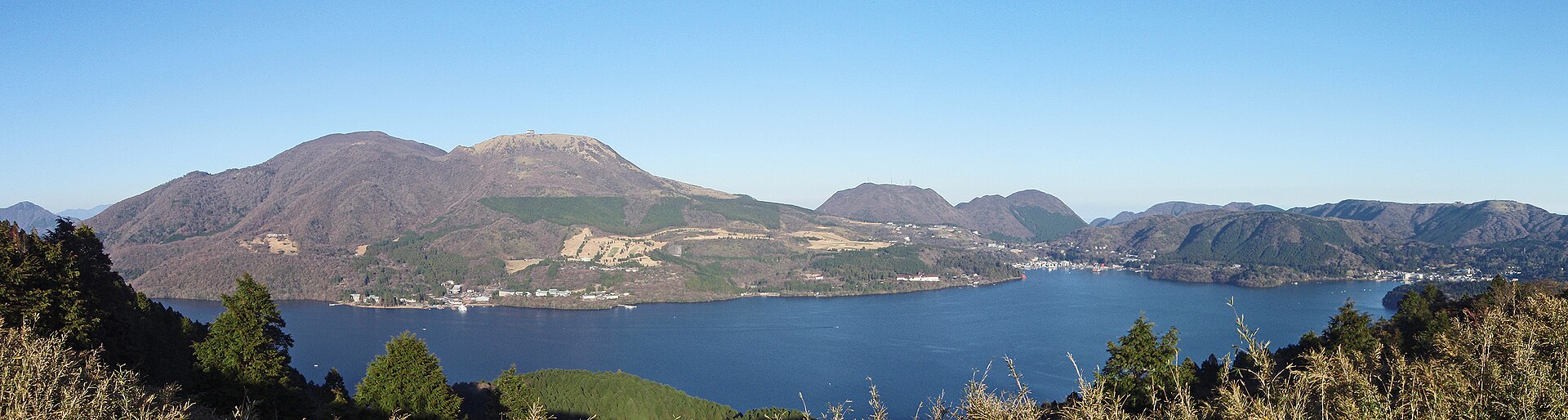
The lake crossing turns a list of locations into a readable landscape. Look toward Futagoyama and understand why the area became inseparable from the Yashima Operation.
The official Evangelion Hakone report connects Futagoyama with the Yashima Operation and describes photographing it from the Lake Ashi cruise. Visibility is never guaranteed. Clouds and mist may hide the mountain completely, but the boat still shows the shape and scale of the Hakone basin better than a road-level stop.
Board at Togendai and continue to Moto-Hakone or Hakone-machi depending on the day’s service. Check the destination before boarding. The cruise can be delayed, rerouted, or suspended in strong wind, fog, or other poor weather.
Hakone Shrine and the Heiwa no Torii
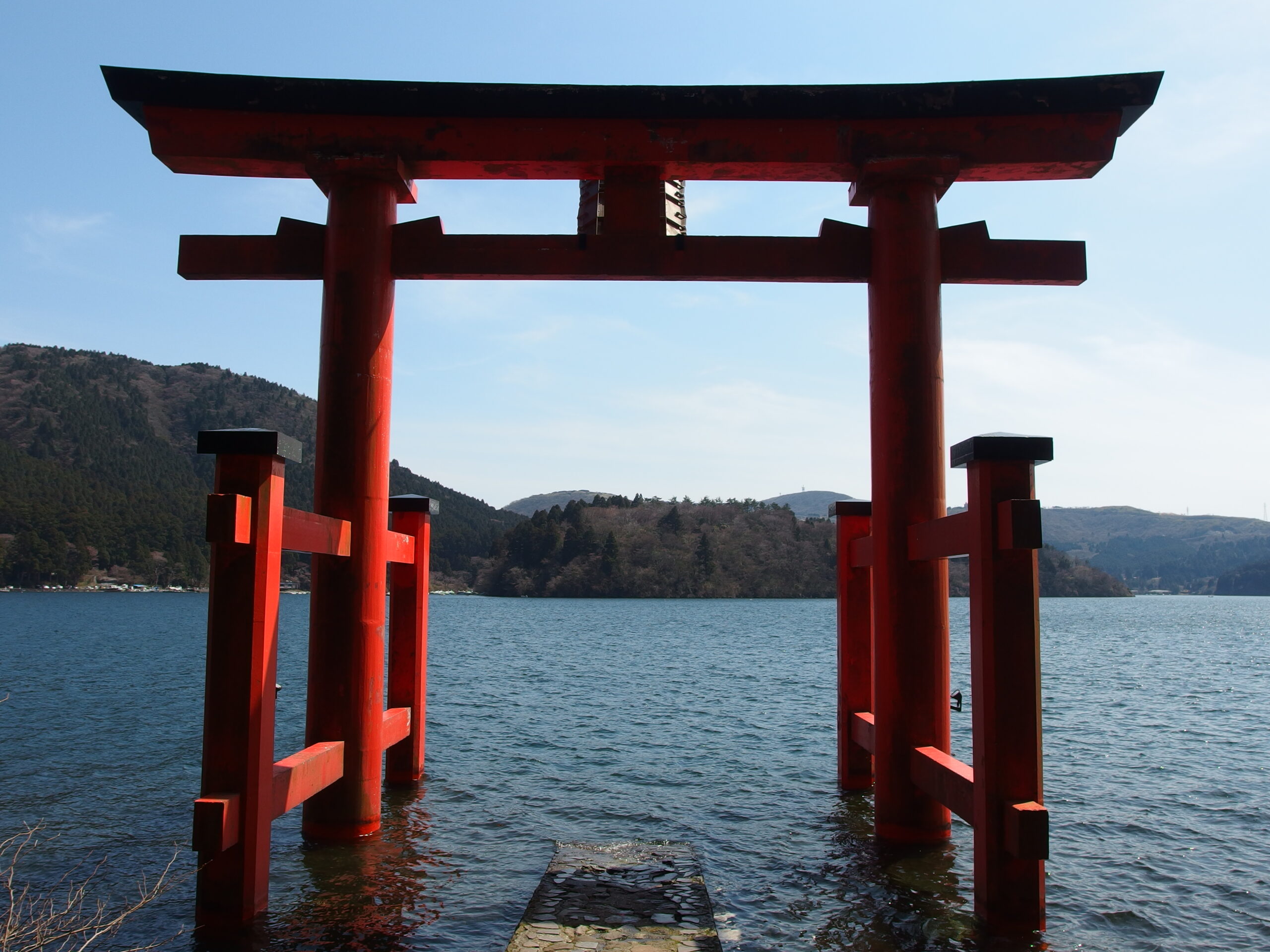
Hakone Shrine is not presented here as a primary anime scene location. It belongs in the route because it is a major Hakone destination, it appears as the final stop in the official Evangelion travel report, and its vermilion lakeside gate gives the journey a memorable ending.
From Moto-Hakone Port, allow roughly 10–15 minutes to reach the shrine area on foot. The main approach includes around 90 stone steps, while the shrine also describes alternative access for visitors who cannot use the stairs. The lakeside Heiwa no Torii has become extremely popular for photographs, and a queue may form. Do not block the lakeside path or treat the shrine as a photo set. Visit the main sanctuary, keep voices low, and follow any temporary restrictions around the gate.
Shrine or extra lake time?
Choose the shrine if this is your first Hakone visit. Skip the photo queue if it threatens your return bus.
Use Moto-Hakone Port
Between 10:00 and 16:00, official shrine guidance directs bus travelers to Moto-Hakone Port rather than expecting the Hakone-jinja-iriguchi stop.
Worship first, photos second
Do not photograph other worshippers closely or monopolize the narrow waterfront approach.
Hakone Curry Cocoro
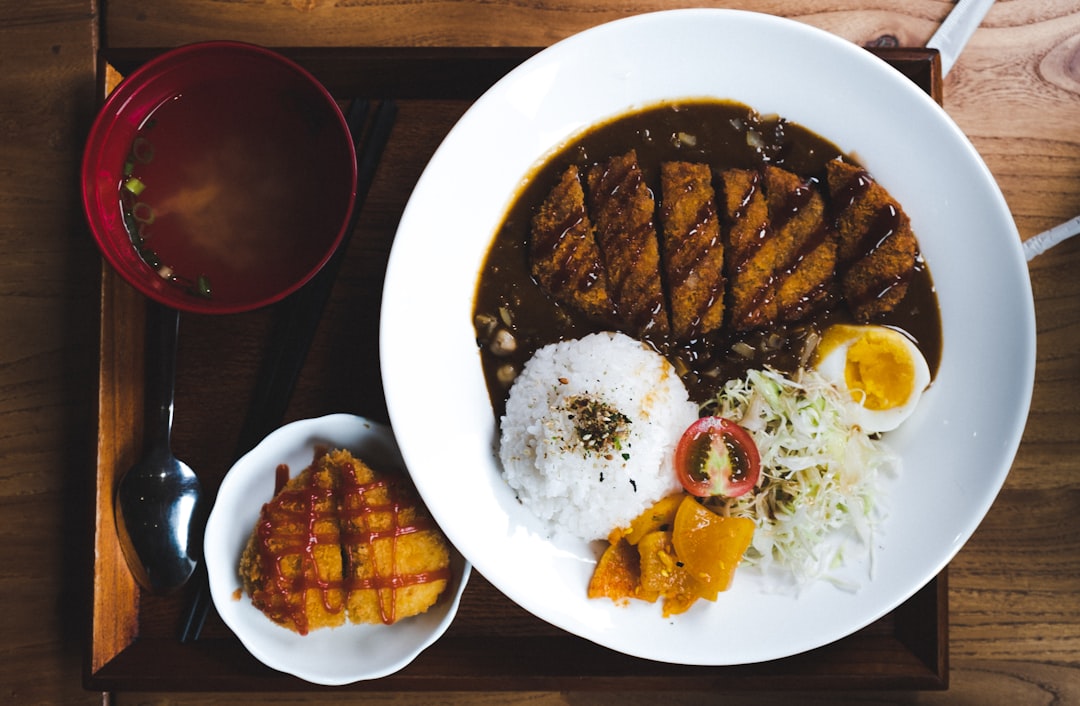
If you eat at one place on this route, make it Hakone Curry Cocoro, about five minutes on foot from Hakone-Yumoto Station. It works because it is a genuine food recommendation first: the restaurant describes a roux cooked for more than five hours, a blend of 17 spices, black rice, and an onsen egg. The Cocoro Special is the signature order.
Why it fits the route
The evening service lets you finish the mountain loop without sacrificing Owakudani or the lake. It also keeps the article’s food stop close to the return station rather than sending tired travelers on another detour.
Check before going
Current official tourism information lists Monday as the regular closing day. The restaurant’s detailed lunch and dinner schedule can vary by weekday, so check the official listing on the day.
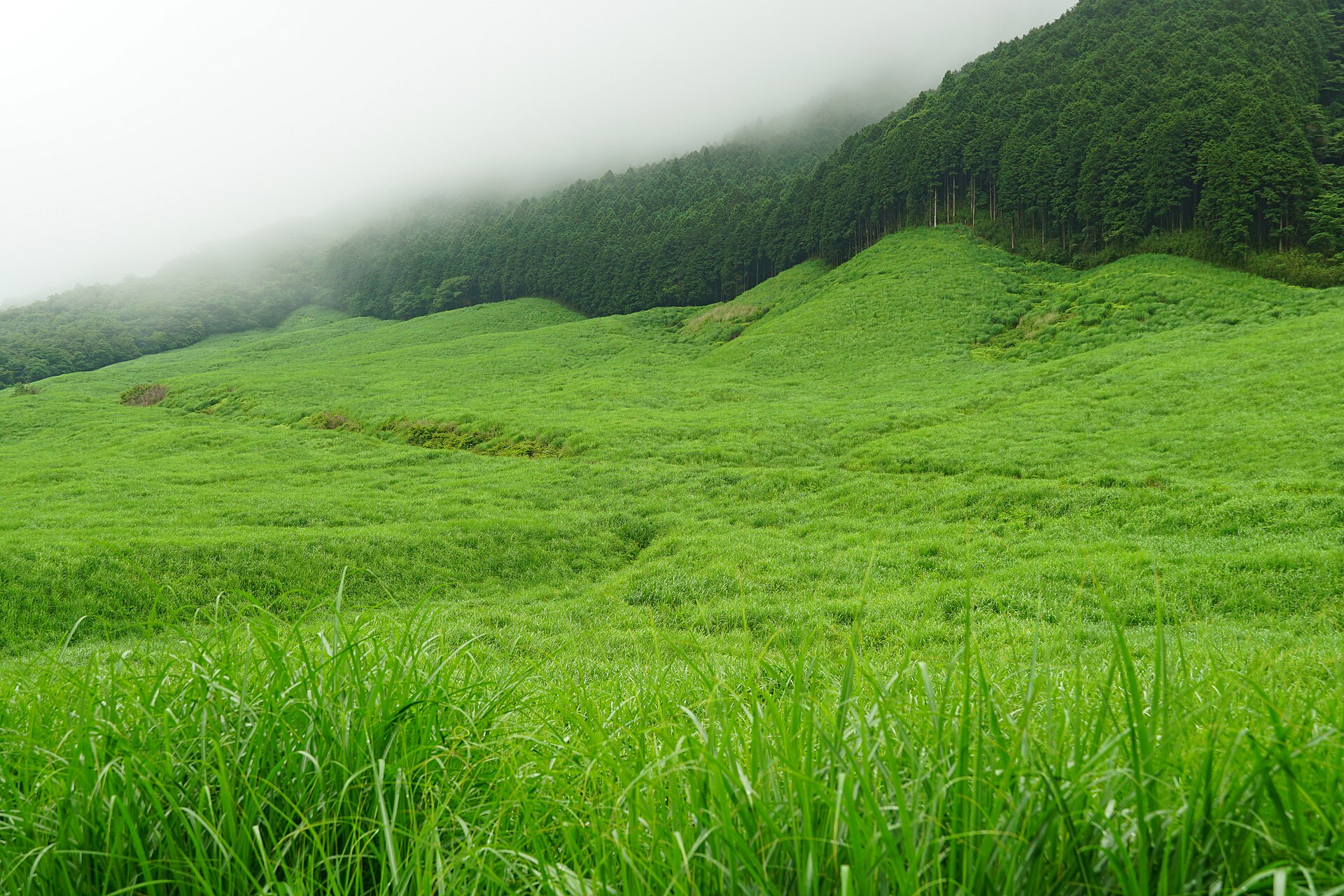
Photo: Sengokuhara Hakone by 663highland, CC BY-SA 4.0. Resized by WordPress.
Sengokuhara Deep-Fan Route
Sengokuhara is better as a second-day extension than a rushed detour. The official Evangelion report connects the area with NERV headquarters, the school area, Kintoki Shrine, and Togendai.
Stay nearby or return the next morning. Visit Kintoki Shrine, the current Sengokuhara Outpost public toilet at Kintoki Park, and the grass fields. Treat the former school facility as an active educational property: do not enter, wait outside, photograph students, or build the route around it.
Kintoki Shrine
Officially connected with the place where Toji and Kensuke watched the battle. Allow time for shrine steps and a respectful visit.
Sengokuhara Outpost
A current licensed Evangelion collaboration built as a public toilet. Use it normally; do not occupy it for prolonged photography.
Susuki Grass Fields
A broad one-way landscape that is especially striking in autumn, when golden pampas grass also draws heavy crowds.
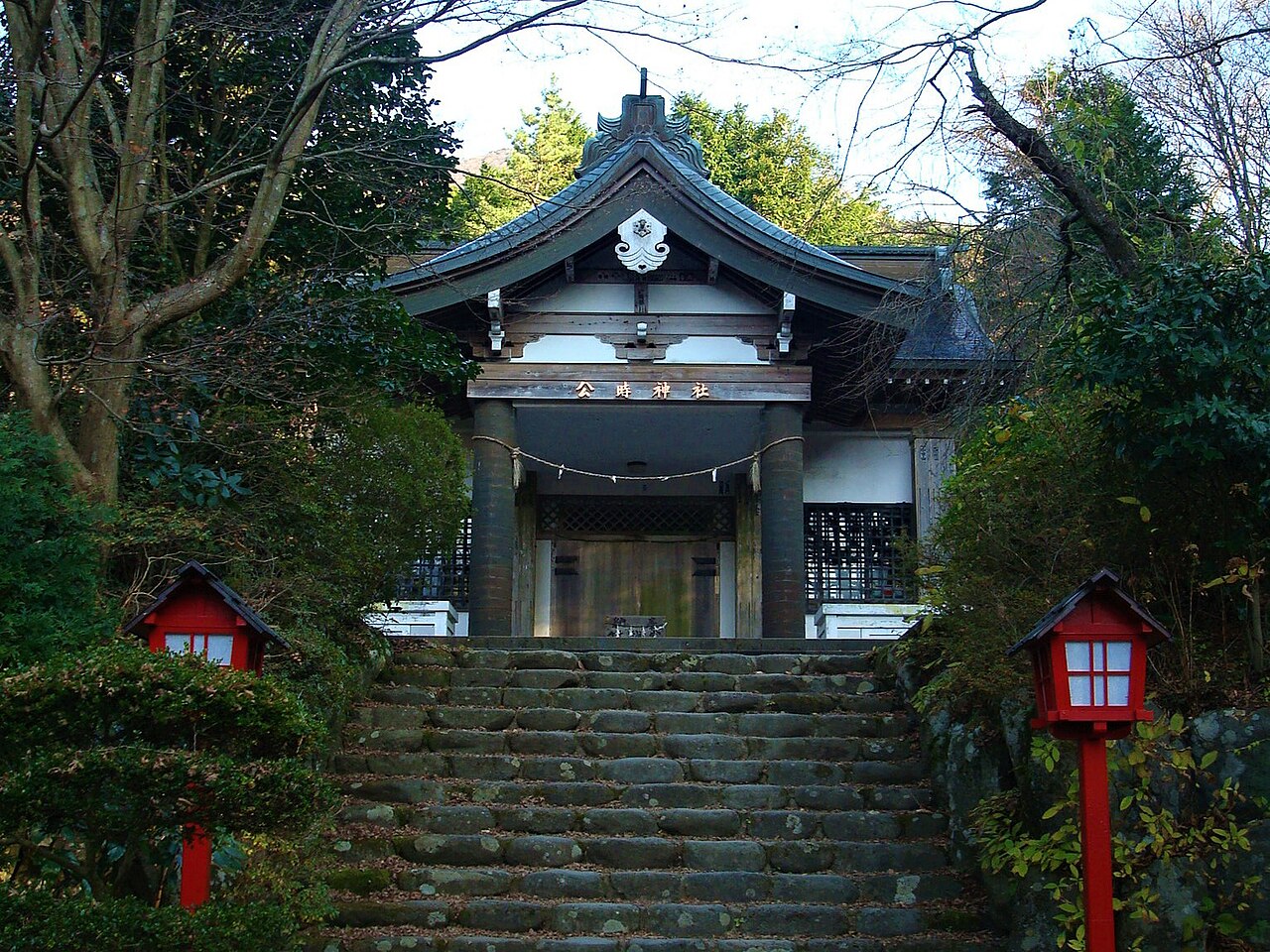
Photo: Kintoki Shrine by Koda6029, CC BY-SA 4.0. Resized by WordPress.
Kintoki Shrine
TV EPISODE 3 CONNECTIONThe official Evangelion Hakone report identifies Kintoki Shrine as the place connected with Toji and Kensuke leaving the shelter to watch the battle. Unlike a decorative collaboration, the shrine is a real religious place with its own history, forest approach, and association with the Kintaro legend.
From Hakone-Yumoto, official access guidance lists roughly 26 minutes on the L bus route to Kintoki-jinja-iriguchi, followed by about six minutes on foot. If using another Sengokuhara service, confirm the correct stop and walking route before boarding because bus route letters and stopping patterns matter.
The Evangelion Melody Road
The Ashinoko Skyline has a melody pavement that plays “A Cruel Angel’s Thesis” through tire vibration when driven in the specified direction and near the recommended speed. It is on an automobile-only toll road, not on the public-transit loop.
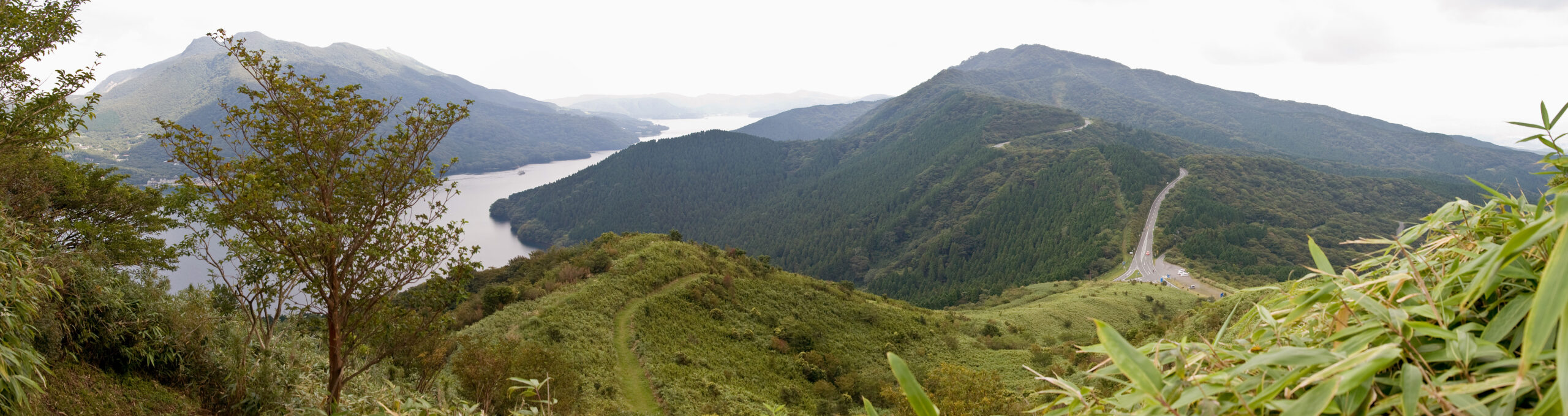
Current official guidance checked August 22, 2026: drive north to south toward Hakone Pass at about 40 km/h. The road lists operating hours of 7:00 AM–7:00 PM and a combined main-line/Kojiri-line charge of ¥1,000 for a regular or light car. Recheck the official page before driving.
Never stop on the roadway to record the sound, walk onto the road, cycle there, or exceed the posted limit to make the melody clearer.
Bad-Weather and Suspension Plans
Hakone’s most cinematic transport is also weather-sensitive. Build a route that can fail gracefully instead of treating a suspension as a ruined day.
Ropeway suspended
Visit EVA-YA, then use buses toward Sengokuhara for Kintoki Shrine, the outpost, and the grass fields. Return to Hakone-Yumoto for dinner.
Cruise suspended
Continue to Togendai if access is possible, then return by bus. Use the saved time for Sengokuhara or Hakone-Yumoto.
Avoiding Owakudani
Take a direct bus from Hakone-Yumoto toward Togendai and build the day around Lake Ashi, Moto-Hakone, and Hakone Shrine.
Tickets, Luggage, and Timing
Hakone Freepass
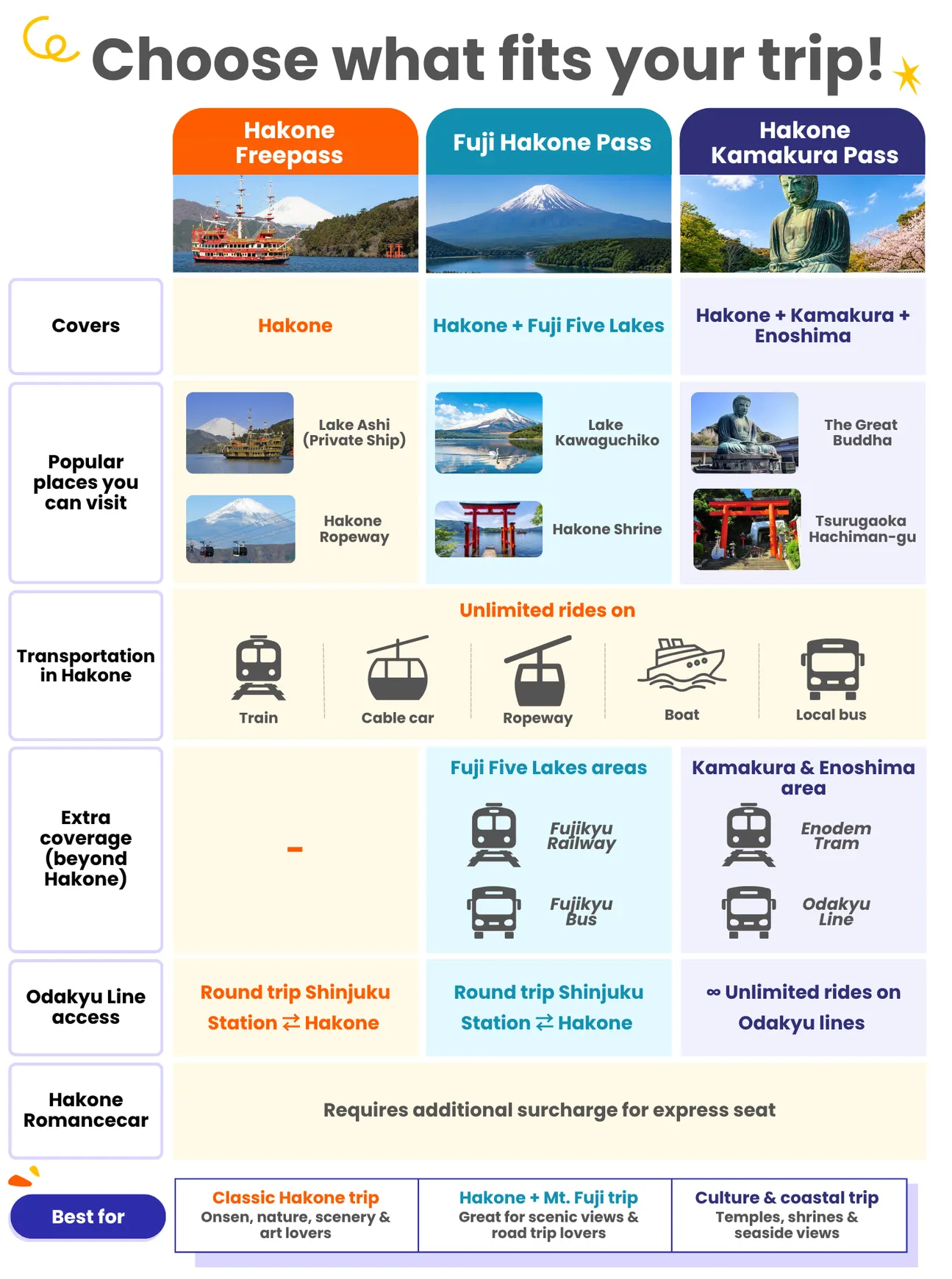
One pass for the mountain loop
The Hakone Freepass covers unlimited rides on eight designated transport networks, including the Hakone Tozan Railway, cable car, ropeway, sightseeing cruise, and relevant bus sections. From October 1, 2025, the official adult price is ¥7,100 for two days from Shinjuku or ¥6,000 from Odawara. A three-day pass is ¥7,500 from Shinjuku or ¥6,400 from Odawara. The Romancecar requires a separate limited-express ticket.
Compare the pass with separate fares based on your starting point and whether you will stay overnight. Confirm the inclusions shown for your date on Klook rather than assuming every package is identical.
Promotional image: Klook. Product details and availability can change.Do not carry large luggage around the loop
Hakone-Yumoto has luggage storage and delivery services. Official information lists temporary storage reception from 9:00 AM to 5:30 PM, with collection by 6:00 PM, subject to size and weight limits. The official FAQ also warns that large baggage cannot be taken on the ropeway. Leave a suitcase at your Tokyo hotel, forward it to your Hakone accommodation, or store it before visiting EVA-YA.
If you need help planning mobile navigation and live service checks, the site’s Japan travel apps guide explains a compact setup. If you are deciding whether to use an IC card alongside a regional pass, see the Japan IC card guide for tourists. These solve itinerary problems; they are not required reading.
Where to Stay in Hakone
An overnight stay is worthwhile if you want Sengokuhara, an onsen evening, or a less rushed lake crossing. Choose the area by the next morning’s movement rather than by hotel ranking alone.
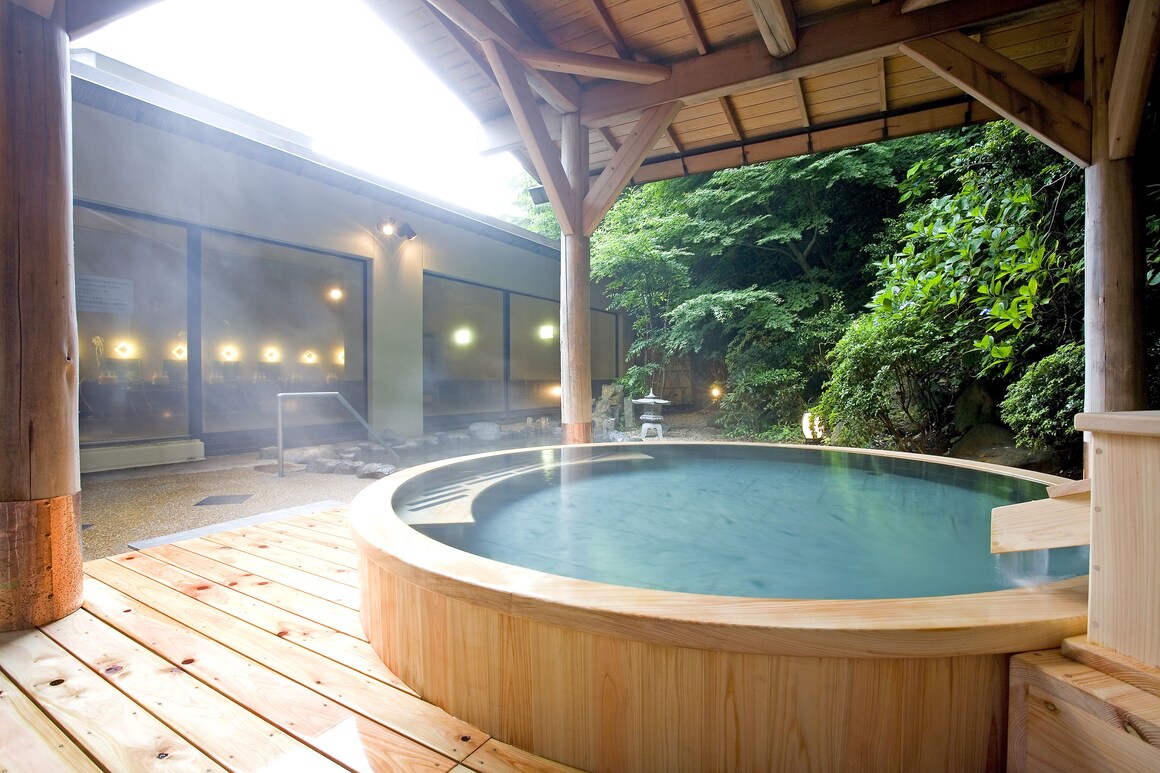
Hakone-Yumoto
Yumoto Fujiya HotelChoose it for the easiest arrival, luggage services, EVA-YA, food, and a straightforward return to Tokyo.
Promotional image: Klook.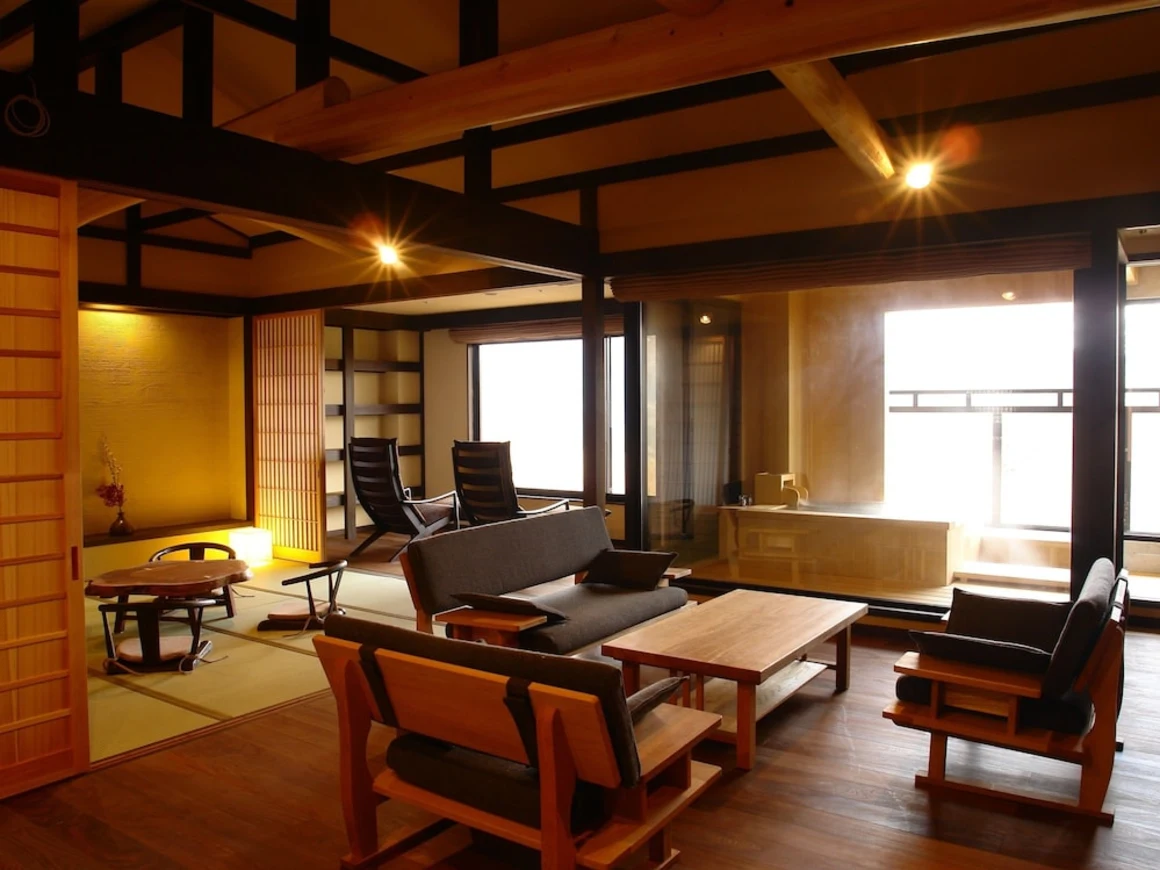
Gora
Gora HanaougiChoose it to slow down the mountain railway and cable-car section or add museums and an onsen stay.
Promotional image: Klook.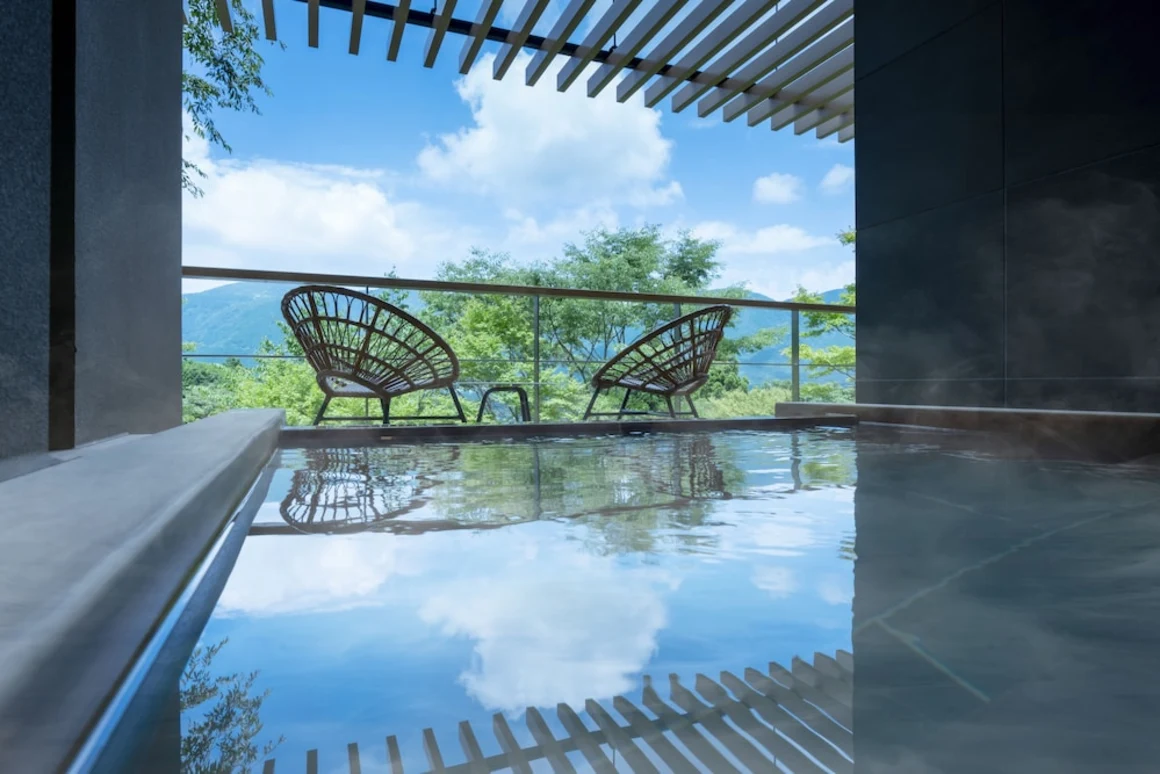
Sengokuhara
Hoshino Resorts KAI SengokuharaChoose it for Kintoki Shrine, the outpost, grass fields, and a quieter second-day route.
Promotional image: Klook.Hotel prices and availability change by date. Use the destination page to compare properties only after choosing the right area.
Best Time to Visit
The route is possible year-round, but there is no universally best month. Clear winter air can improve mountain visibility, while Owakudani and the ropeway can feel extremely cold. Spring brings green slopes and blossoms but also changeable weather. Summer is lush and humid, with clouds often hiding distant peaks. Autumn brings strong color around Owakudani and golden grass in Sengokuhara, together with some of the year’s heaviest crowds.
A weekday morning is usually the most practical choice. Reach Hakone-Yumoto around 9:00 AM, place the weather-sensitive sections early, and avoid building the schedule around a perfect photograph of Mount Fuji or Futagoyama. Visibility is a bonus, not a promise.
Safety, Accessibility, and Pilgrimage Etiquette
Never chase an exact angle from traffic
Stay on sidewalks and marked viewpoints. Do not stand in a road, railway area, or restricted shoulder for a scene match.
Do not visit the former school as an attraction
It is used by an educational operator. No entry, waiting, student photography, or long exterior shoots.
Remember where you are
Keep voices low, follow worship and photography guidance, and let ordinary visitors pass before taking pictures.
Do not obstruct operations
Keep bags close, move away from gates, and follow staff directions even if a display creates a photo opportunity.
Take gas warnings seriously
Read current notices, do not enter restricted paths, and leave if you feel unwell.
Plan by segment
Ropeway stations and sightseeing ships provide wheelchair support, but shrine steps and the Sengokuhara extension are less consistent.
What to Watch Before You Go
You do not need a full rewatch, but a short refresher makes the landscape easier to read. Useful choices include TV Episode 1 for the arrival in Tokyo-3, Episode 3 for the Toji and Kensuke connection, Episode 6 for the Yashima Operation, Evangelion: 1.0 You Are (Not) Alone for the railway and mountain setting, and Evangelion: 2.0 You Can (Not) Advance for Togendai.
Streaming availability varies by country. Use a legal local streaming service or disc release rather than relying on a provider name that may not apply in your region.
Evangelion Hakone FAQ
Is Hakone really the setting of Evangelion?
Yes. Official Evangelion material describes Hakone as the model for Tokyo-3, and official reports connect specific transport and landscape locations with scenes.
Can I complete the pilgrimage without a car?
Yes. The recommended route uses the Hakone Tozan Railway, cable car, ropeway, Lake Ashi cruise, and bus. A car is only needed for the Ashinoko Skyline melody road.
Is EVA-YA still open?
Yes as of August 22, 2026. The official store lists the Hakone-Yumoto Station first-floor location, 9:00 AM–6:00 PM hours, and irregular closing days.
Is the NERV decoration still at Togendai?
Do not assume older large-scale decoration is permanent. Togendai’s scene connection is confirmed, but installations may change. Check current official announcements and treat anything extra as a bonus.
Is one day enough?
One full day is enough for EVA-YA, the mountain railway, Owakudani, Togendai, Lake Ashi, and Hakone Shrine if services run normally. Stay overnight for Sengokuhara, Kintoki Shrine, or a relaxed onsen experience.
Does the Hakone Freepass cover the route?
It covers the main designated train, cable car, ropeway, cruise, and bus network used by the loop. It does not include the Romancecar limited-express surcharge or every bus operator and attraction.
What if the ropeway or cruise is suspended?
Switch to the Sengokuhara bus route or build the day around Hakone-Yumoto, Togendai, Moto-Hakone, and Hakone Shrine according to the services still operating.
Can I visit the school model?
No. The former school facility is used for education. Do not enter the property or treat it as a public sightseeing location.
Is Owakudani safe if I have asthma?
Volcanic gas can be dangerous for travelers with respiratory conditions. Read the official warnings and do not force the stop. This guide cannot replace medical advice.
More Anime Pilgrimage Guides
Final Mission Checklist
- Check the ropeway and cruise operation before leaving Hakone-Yumoto.
- Leave large luggage at the station or your accommodation.
- Visit EVA-YA early if store merchandise matters to you.
- Keep the lake crossing before late afternoon.
- Save every Google Maps pin before the day trip.
- Treat temporary Evangelion decorations as a bonus, not the route’s foundation.
- Respect shrines, schools, stations, roads, and ordinary local life.
- Lake Ashi, Mount Fuji, and Hakone Shrine — Charlie fong, CC BY-SA 4.0; cropped and color-adjusted.
- Hakone-Yumoto Station — Kounoichi, CC BY-SA 4.0; cropped for the EVA-YA section.
- Torii on Lake Ashi at Hakone Shrine — Guilhem Vellut, CC BY 2.0; resized by WordPress.
- Hakone-Tozan Series 3100 — MaedaAkihiko, CC0 1.0.
- Owakudani, Hakone July 2018 — Alvinz, CC0 1.0.
- Hakone Ropeway over Owakudani — TLV and more, CC BY 2.0; resized by WordPress.
- Togendai Station Hakone — 663highland, CC BY-SA 3.0; resized by WordPress.
- Hakone volcano and Lake Ashi — Batholith, public domain.
- Sengokuhara Hakone — 663highland, CC BY-SA 4.0; resized by WordPress.
- Kintoki Shrine — Koda6029, CC BY-SA 4.0; resized by WordPress.
- Ashinoko Skyline 02 — Σ64, CC BY 3.0; resized by WordPress.
Evangelion names and references are used editorially to identify the work and travel context. No anime screenshots, character images, official logos, or NERV marks are reproduced in this guide.