A Silent Voice Pilgrimage in Ogaki: Real-Life Locations & Walking Route
Walk from Ōgaki Station to the riverside places that shaped A Silent Voice, ending at the film’s iconic Midori Bridge.
2026 marks ten years since the film’s Japanese theatrical release.
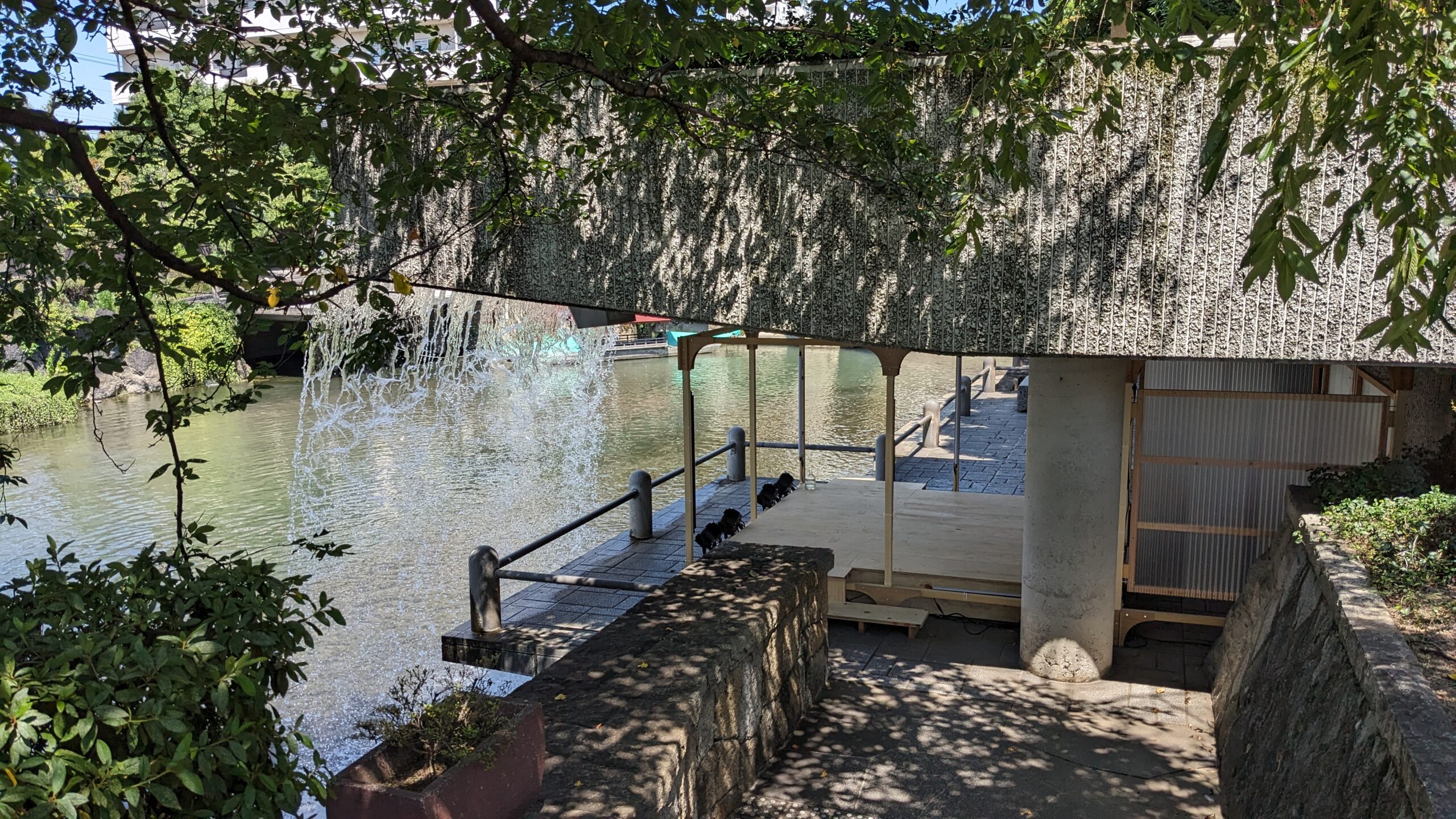
Is A Silent Voice really set in Ogaki?
Yes — although the film’s town is fictional, the Ōgaki Tourism Association officially identifies multiple real places in Ōgaki that were used as models for A Silent Voice. These include JR Ōgaki Station, Shin-Ōhashi Bridge, Ōgaki Park, the General Welfare Hall, Four Seasons Plaza, and Midori Bridge.
The best first pilgrimage is not to chase every location scattered across Gifu. Start at Ōgaki Station and walk south through the city toward the Suimon River. In about half a day, you can see the locations that give the film its strongest sense of place and finish at Midori Bridge, the riverside spot shown on the movie poster.
As of 2026, A Silent Voice is also streaming on Crunchyroll in supported regions; availability varies by country.
Affiliate disclosure: This guide contains affiliate links to CDJapan. If you buy through them, Life with Saki may earn a commission at no extra cost to you. Recommendations are chosen for their relevance to this pilgrimage first, not commission rate.
Official Japanese Picks · CDJapan
Availability checked August 27, 2026 · Current purchasable Japanese editionsJapanese DVDPCBE-55668 · REGION 2
A Silent Voice — Japanese DVD
A compact official visual anchor for the film before the walking route begins. This is a Japanese-market Region 2 DVD with Japanese audio and subtitles, so check playback compatibility before ordering.
View the DVD on CDJapan →
Station → City → Water
Six confirmed locations lead south from JR Ōgaki Station to Midori Bridge. Station Road is a transition, not a seventh stop.
How to get to Ogaki
Ōgaki is easier to add to a Japan trip than its location in Gifu might suggest. From Nagoya, the JR Tokaido Main Line reaches Ōgaki in roughly 30 minutes, making this pilgrimage a realistic half-day or day trip from a Nagoya base.
If you are arriving from Tokyo, Kyoto, or Osaka, treat Nagoya or Maibara as the main intercity transfer point rather than trying to build the anime route around a long same-day cross-country journey.
For the pilgrimage itself, use the South Exit of JR Ōgaki Station. The main locations in this guide are compact enough to visit on foot, and you do not need a car.
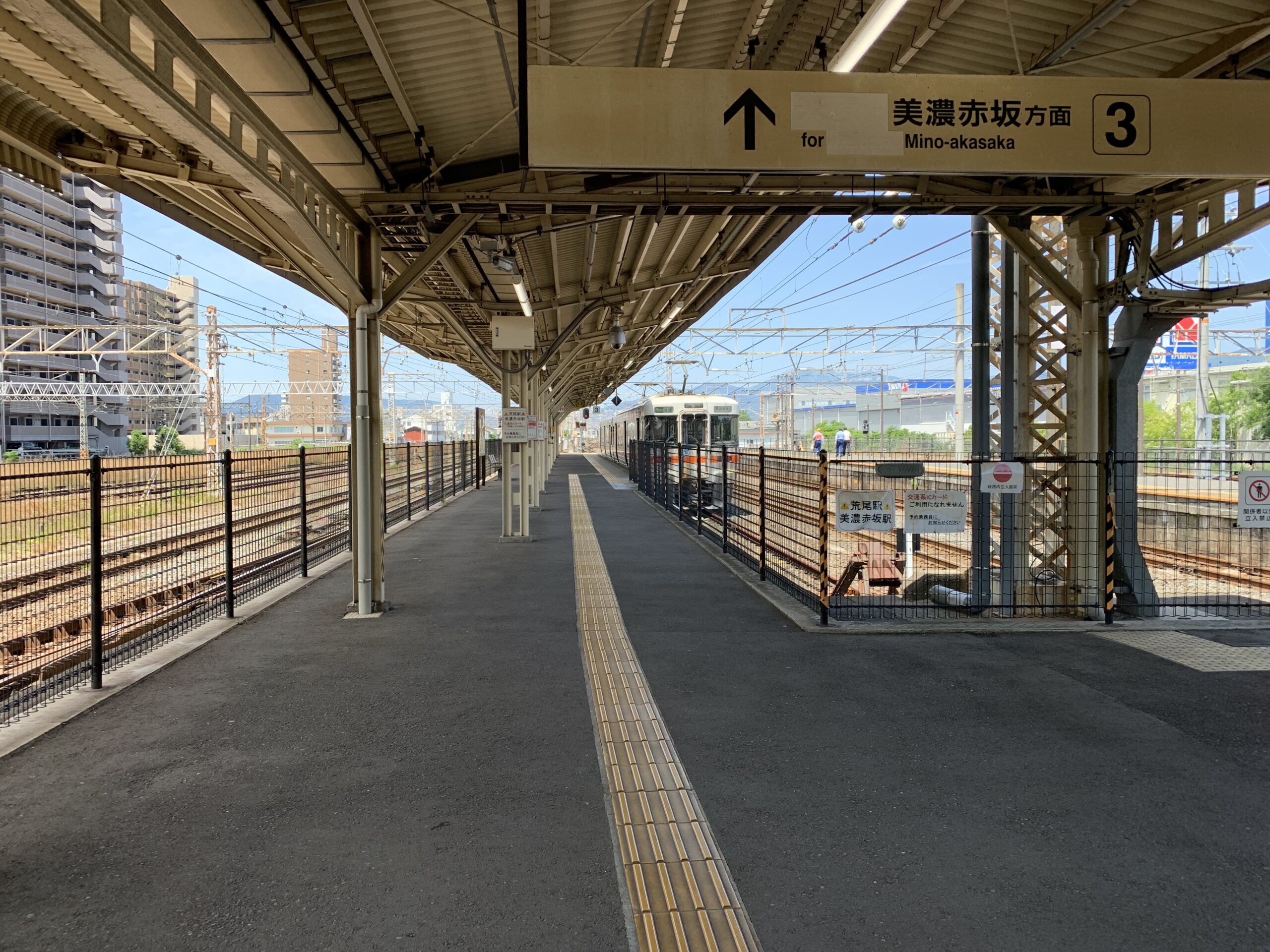
JR Ōgaki Station
The pilgrimage starts at JR Ōgaki Station, the same gateway the film uses when Shōya and his friends travel to look for Sahara. For a first visit, the important thing is not to search every platform angle — it is to leave through the South Exit and immediately understand how close the rest of the route is.
Outside the station, the city center stretches directly south toward the Suimon River.
Practical: avoid long photo setups around ticket gates or commuter flows.
Shin-Ōhashi Bridge
Shin-Ōhashi is the first location on this walk where the film connection becomes immediately specific. The Ōgaki Tourism Association identifies the bridge as the place used for Shōko’s confession to Shōya.
Because the bridge sits directly on the route south from the station, the ordinary city grid quickly becomes a recognizable A Silent Voice location.
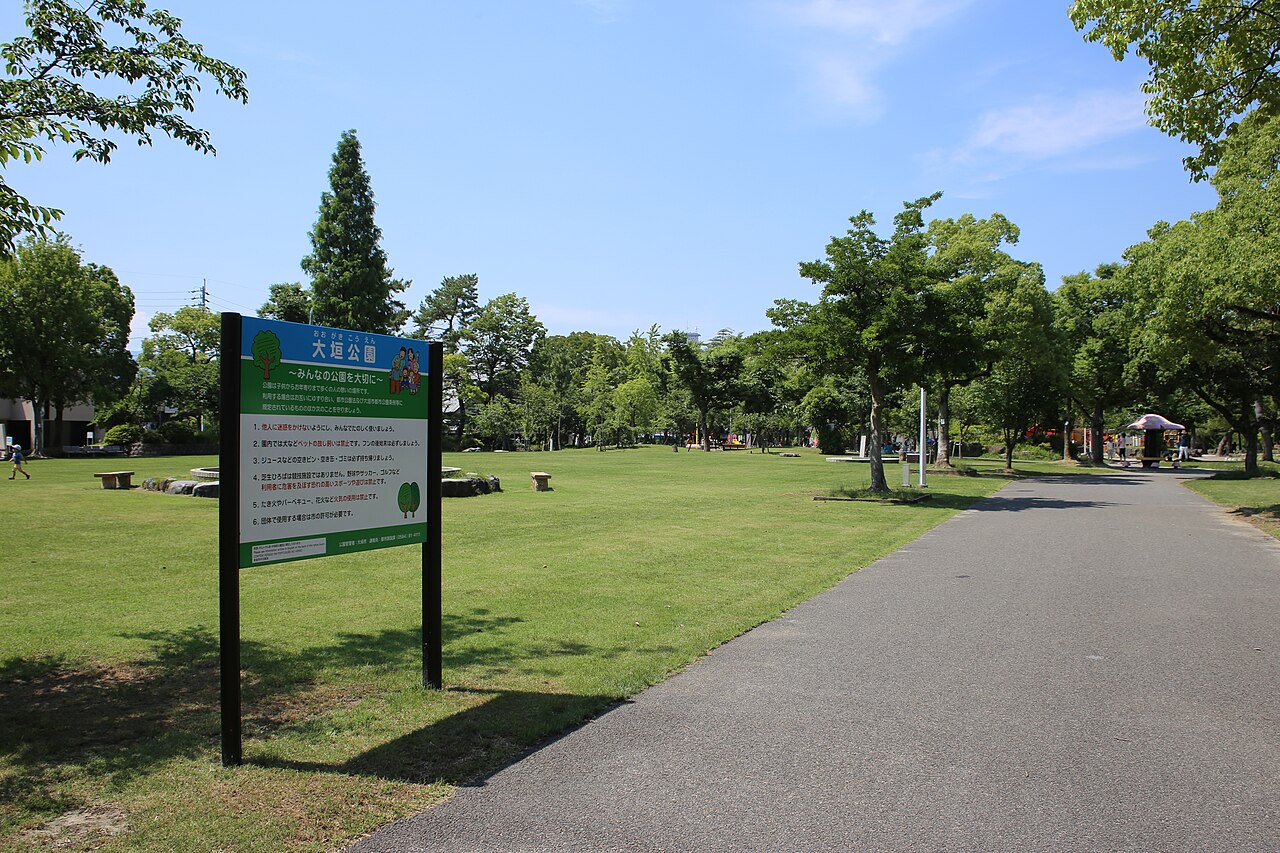
Ōgaki Park
Ōgaki Park gives the route its first natural pause. It is an officially listed A Silent Voice location and a useful place to slow down before continuing toward the river.
The city describes it as its oldest urban park, centered around Ōgaki Castle. The general park area is open all day and free, although individual facilities have their own hours.
Current note: redevelopment is planned, but this does not currently mean the park is closed.
General Welfare Hall
The General Welfare Hall is one of the least dramatic-looking places on the route — and that is exactly why it belongs here. The official film-location guide identifies it as the setting used for the sign-language classes.
This is an active public welfare facility, not an anime attraction. Treat it as a short exterior stop. There is no need to enter simply to recreate a scene, and visitors should not interfere with people using the facility.
Four Seasons Plaza
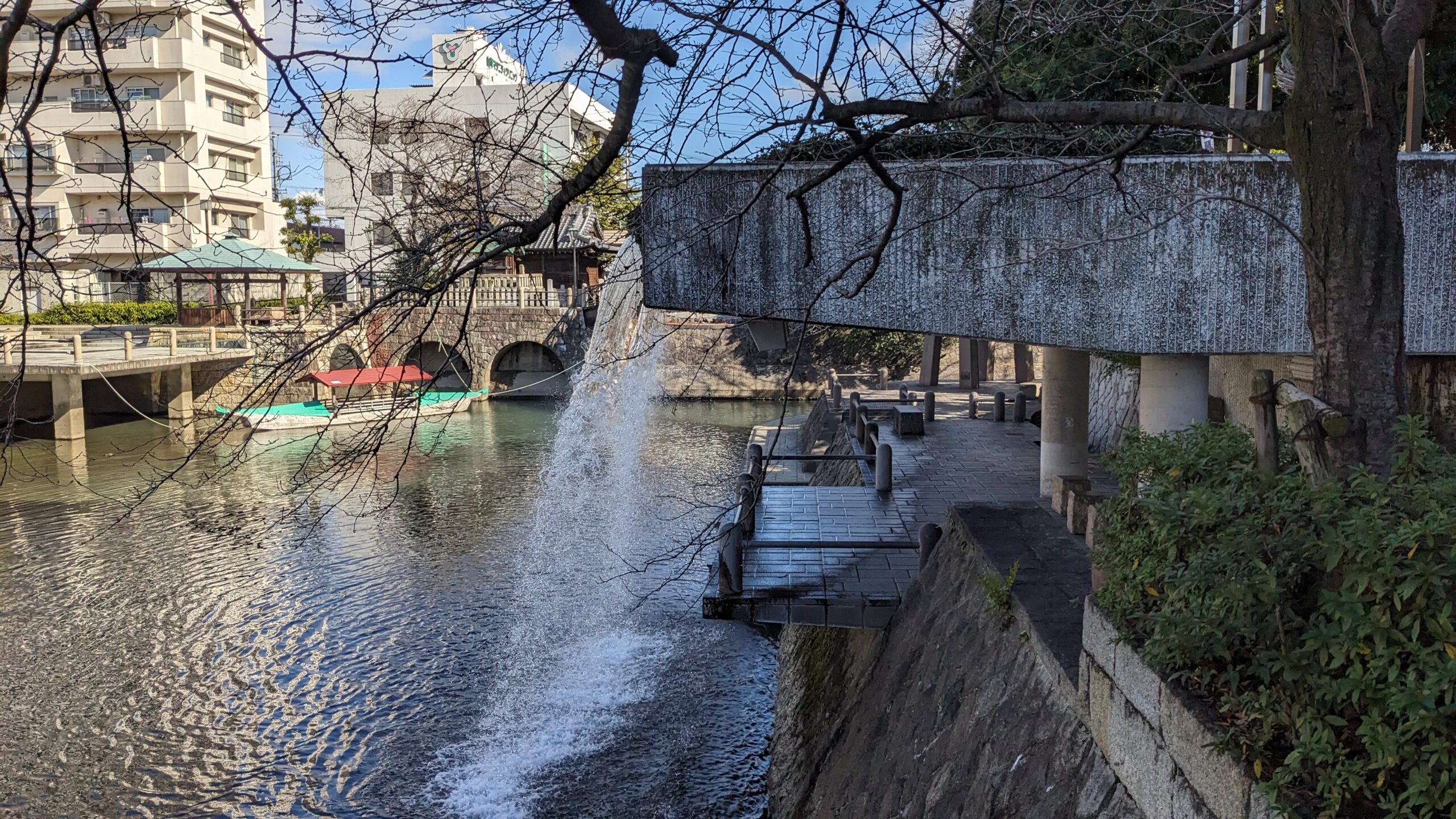
The route changes here
Four Seasons Plaza is where this pilgrimage stops feeling like a simple city walk and starts feeling unmistakably like the “Water City.” The public space sits along the Suimon River and includes the Waterfall Tunnel, waterside paths, koi, and several small bridges used as visual references in A Silent Voice.
Do not break every feature into a separate numbered location. Treat the plaza as one scene cluster and explore it slowly for 20–30 minutes.
Midori Bridge
Midori Bridge is the place to end the first Ōgaki pilgrimage.
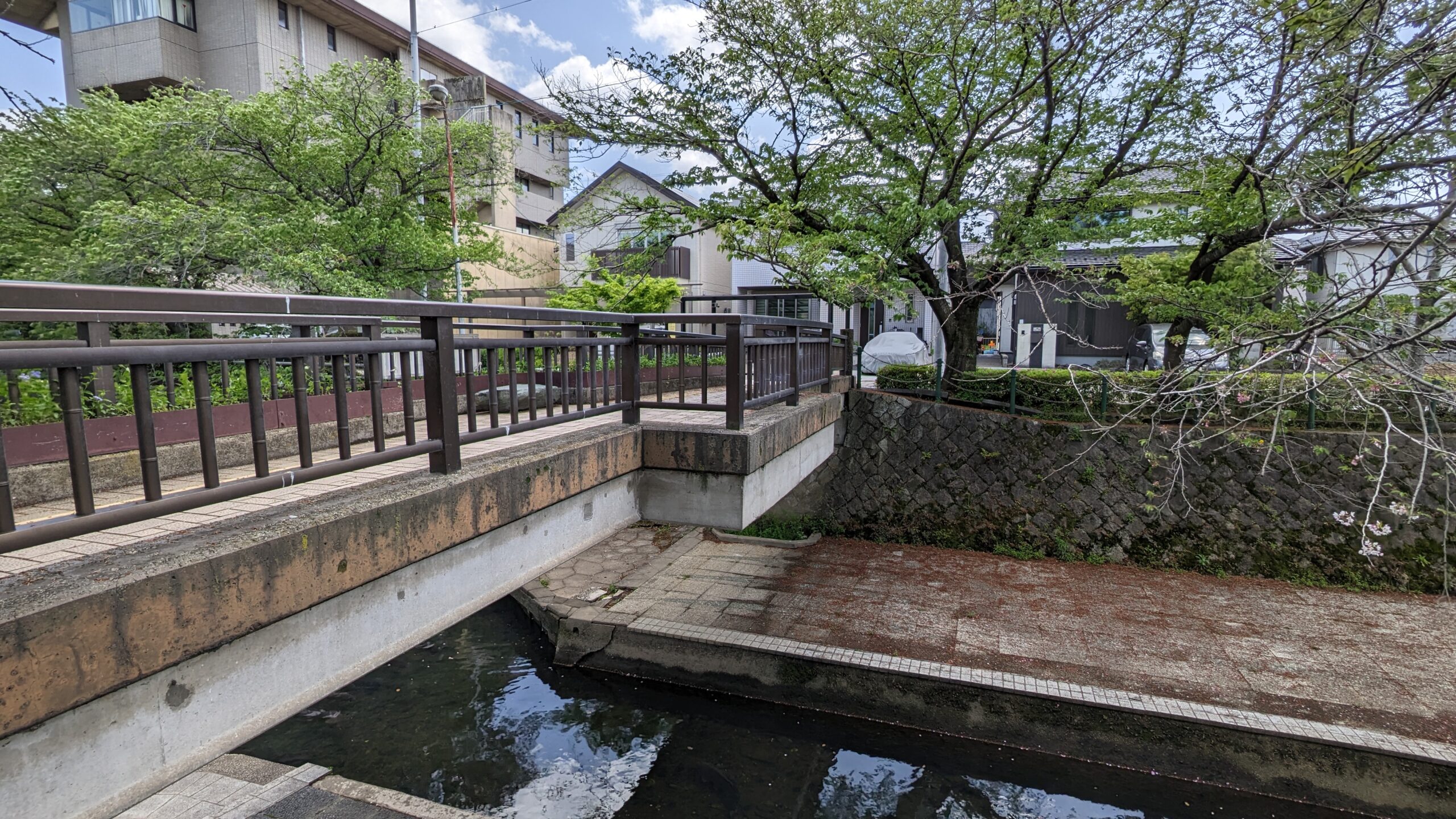
The Ōgaki Tourism Association identifies the bridge inside Four Seasons Plaza as a film location and notes that it appears on the movie poster. By the time you reach it, the station streets and city-center stops have fallen away; the river, trees, bridge rails and quiet pedestrian scale become the entire scene.
Look for the narrow bridge, stone entrance posts, tactile paving, the Suimon River below and the way trees frame both approaches.
Start on the bridge, then look back from the side path instead of blocking the crossing. Reusable photo sources suggest useful viewpoints around 354° and 29°, but these are reference angles, not mandatory anime camera coordinates.
Open Midori Bridge in Google MapsIf you only have time for one place from A Silent Voice in Ōgaki, make it this one.
Photography: keep the bridge passable. If residents are crossing, step aside and wait.
One local sweet to try in Ogaki
Kinchōen Sōhonke — Ōgaki Station-front main store
If you eat one local sweet during this pilgrimage, make it something that belongs to the Water City itself.
Kinchōen Sōhonke has been making sweets in Ōgaki since 1798 and sits about a minute from the station’s South Exit. Its seasonal mizu-manju uses the city’s water as part of both the product and the experience, making it a natural match for a route that ends beside the Suimon River.
In season: order mizu-manju, currently listed from April through September. Outside the season: try Kinchōen Manju.
How much time do you need?
Confirmed highlights
Keep every stop short. Skip extended photography and optional wandering.
- Station and Shin-Ōhashi
- Park and Welfare Hall exterior
- Four Seasons Plaza
- Midori Bridge
The default route
Allow time to orient, photograph safely, rest in the park, explore the plaza and spend real time at Midori Bridge.
Add a short sweet stop.
Experience the city
Add a longer park break, both public river levels, seasonal food, slower photography and nearby non-anime wandering.
You do not need to visit every A Silent Voice location
Ōgaki and the surrounding area contain more A Silent Voice references than this route includes. That does not mean you should try to collect all of them on your first visit.
For most travelers, the compact city-center route gives a better day than adding distant bridges, residential locations, schools, hospitals, or weakly connected scene checks simply to increase the count.
- Aoyanagi Bridge
- Ibi River area
- Distant residential/shop references
- Schools
- Hospital-related locations
- Gifu Station as a same-route add-on
More locations exist. More locations do not automatically make a better pilgrimage.
Have a full day? Extend the pilgrimage to Yoro
If you have a full day and want to continue beyond central Ōgaki, Yōrō is the most coherent extension. The official Ōgaki film-location guide identifies Yōrō Station, Yōrō Falls, and the Yōrō Railway among the places connected with the film.
From Ōgaki, Yōrō Railway runs directly to Yōrō Station. The current adult one-way fare is ¥420; typical direct trips are roughly 20–25 minutes. Check the live timetable for your date.
Yōrō Park is about a 10-minute walk from Yōrō Station. The Site of Reversible Destiny is currently open 9:00–17:00 with last entry at 16:30, adult admission ¥850, and is normally closed on Tuesdays (or the following day when Tuesday is a holiday), plus year-end/New Year closures.
Treat Yōrō as an extension, not another stop on the half-day route.
Best time for the Ogaki pilgrimage
Best default: morning or late afternoon.
Spring
Mild walking weather and riverside scenery. Late March to early April is the typical cherry-blossom window.
Late spring
The strongest balance of greenery, water and longer daylight.
Summer
The Water City identity and mizu-manju season, with heat and humidity.
Autumn
Comfortable walking and softer light.
Winter
The route works, but the riverside is barer than the lush mood some readers expect.
What may change in Ogaki
Ōgaki has adopted a redevelopment plan for the Ōgaki Park area. The plan does not currently mean that the entire park is closed, but future work could change paths, facilities, or photo angles.
Before traveling, recheck Ōgaki Park access, Four Seasons Plaza access, Waterfall Tunnel operation, General Welfare Hall status and temporary construction around the Suimon River.
Anime pilgrimage manners in Ogaki
These are real public spaces used by residents every day. Keep the pilgrimage low-impact.
- Do not block bridges or sidewalks.
- Stay out of roads when recreating angles.
- Treat the Welfare Hall as an active facility.
- Avoid photographing facility users.
- Do not enter schools, private property or residential entrances.
- Skip tripods on narrow paths.
- Photograph the current place rather than forcing an unsafe old angle.
Do you need to stay in Ogaki?
No — not for this pilgrimage alone.
Ōgaki works particularly well as a half-day trip from Nagoya, with rail travel taking roughly 30 minutes. If the main goal is the city-center A Silent Voice route, staying in Nagoya usually gives you more flexibility for the rest of your Japan itinerary.
Consider staying closer only if you want a very early or late photo session, are adding Yōrō and other western Gifu stops, or Ōgaki is part of a slower regional trip.
Frequently Asked Questions
Is A Silent Voice based on a real town?
The film’s town is fictional, but the Ōgaki Tourism Association confirms that many locations in the movie were modeled on real places in Ōgaki, Gifu.
How long does the A Silent Voice pilgrimage in Ogaki take?
Plan about 3–4 hours for the recommended central route. A fast visit can take around two hours, while photography and food can extend the trip to four or five hours.
Do I need a car?
No. The core route starts at JR Ōgaki Station and is designed to be completed on foot.
What is the most important A Silent Voice location in Ogaki?
Midori Bridge is the strongest single stop. It is officially listed as a film location and appears on the movie poster.
Can I visit every A Silent Voice location in one day?
You can visit more than the core route, but trying to include every site across Ōgaki, Yōrō, Gifu and other areas makes the trip much less efficient. This guide intentionally prioritizes one compact pilgrimage.
Should I add Yoro?
Yes if you have a full day and want a second travel experience after central Ōgaki. Keep it separate from the half-day walking route.
Is A Silent Voice on Crunchyroll?
As of 2026, Crunchyroll streams the film in supported regions with English subtitles among the available options. Availability can vary by country, so check the current catalog where you live.
The best way to experience A Silent Voice in Ogaki
Ōgaki works because the locations do not feel like a theme park.
You arrive at a normal station, walk through a normal regional city, cross an ordinary bridge, pass a park and a public building, and then gradually reach the water. By the time you stand at Midori Bridge, those everyday places have started to feel connected.
That is the point of this route. You do not need to collect every possible location. Walk slowly enough to notice why this city became part of the film.
Related Anime Pilgrimage Routes
- Hero / Midori Bridge: UnEtudiantSurTerre, CC BY-SA 4.0, via Wikimedia Commons. Cropped for display.
- Midori Bridge side view: UnEtudiantSurTerre, CC BY-SA 4.0, via Wikimedia Commons. Cropped for display.
- Waterfall Tunnel: UnEtudiantSurTerre, CC BY-SA 4.0, via Wikimedia Commons. Cropped for display.
- JR Ōgaki Station: inunami, CC BY 2.0, via Wikimedia Commons. Cropped for display.
- Ōgaki Park: 円周率3パーセント, CC BY-SA 4.0, via Wikimedia Commons. Cropped for display.