Haikyu!! Pilgrimage in Karumai, Iwate
Ride a rural bus from Ninohe, then walk past school gates, gym stairs, small shops and river scenery that make this quiet northern-Iwate town feel instantly familiar to Haikyu!! fans.
Karumai does not feel like an anime theme park. That is exactly why the pilgrimage works. You arrive by bus, step into an ordinary northern-Iwate town, and then familiar shapes begin to appear: a school entrance, an outdoor staircase, an old storefront and the riverbank at the edge of town.
Do not come to Karumai just to collect pins. Walk the town in the same everyday rhythm that makes Haikyu!! feel so grounded.
This guide is designed for international visitors traveling without a car. It starts and ends at Karumai Cultural Exchange Center “Ukamekan,” puts lunch inside the walking loop, and plans the day around the limited return bus so you can actually complete the pilgrimage without guessing your way back to Ninohe.
Haikyu!! is heading back to theaters in 2027.
The official Haikyu!! site confirms that Haikyu!! The Movie: VS Little Giants and the special anime Haikyu!!: Where Monsters Go are scheduled for 2027. That makes Karumai more than a nostalgia trip: interest in the series is still active and growing.

Haikyu!! 10th Chronicle
A 214-page Japanese anniversary volume from Haruichi Furudate and Shueisha. It is a strong visual bridge between the real streets of Karumai and the series that brought fans here.




Japanese editions and official music releases. Prices and availability can change.
Yes — you can visit Karumai without a car.
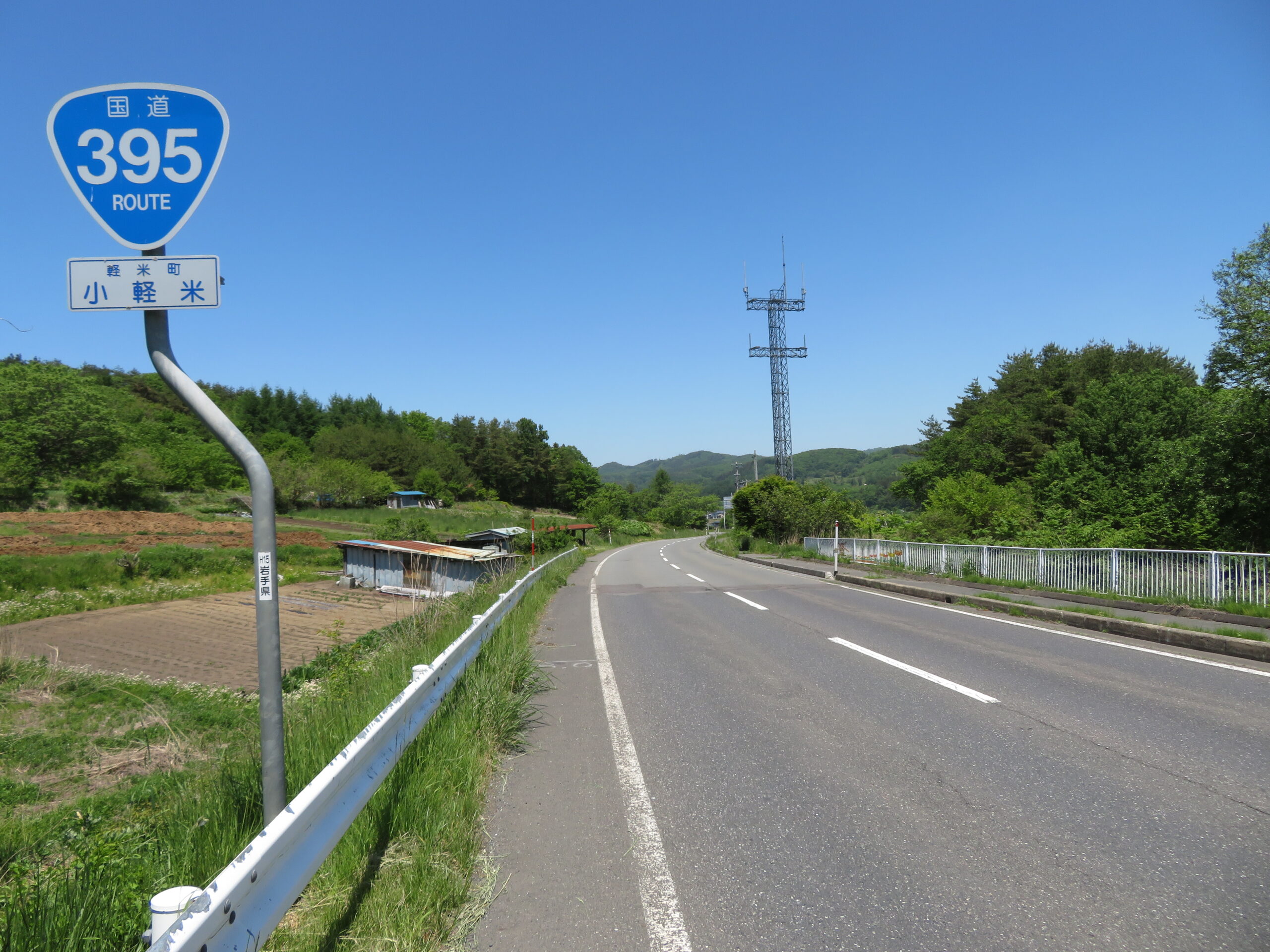
On weekdays, the most useful bus leaves Ninohe Station at 09:35 and reaches Karumai Cultural Exchange Center at 10:32. For the return, the center has buses at 16:46 and 17:51. The one-way fare between Ninohe Station and the cultural center is currently ¥1,070.
JR Bus Tohoku also states that the JR EAST PASS and JAPAN RAIL PASS are valid on this local route. Always recheck the timetable before travel.
Your Haikyu!! Karumai route
The route begins at the town’s visitor gateway, moves through the commercial center, reaches the school-and-gym cluster, and finishes by the river before you return to the bus.
What the pilgrimage looks like on the ground
Television Iwate’s official 2024 feature walks through Karumai’s manga-associated scenery and local fan culture. Use it as visual context — not as a substitute for checking current opening hours and local rules.
Start at Ukamekan
Karumai Cultural Exchange Center “Ukamekan” is the best place to begin because it solves several travel problems at once: the JR bus stops here, the waiting room has toilets and lockers, and Karumai distributes its town exploration map here.
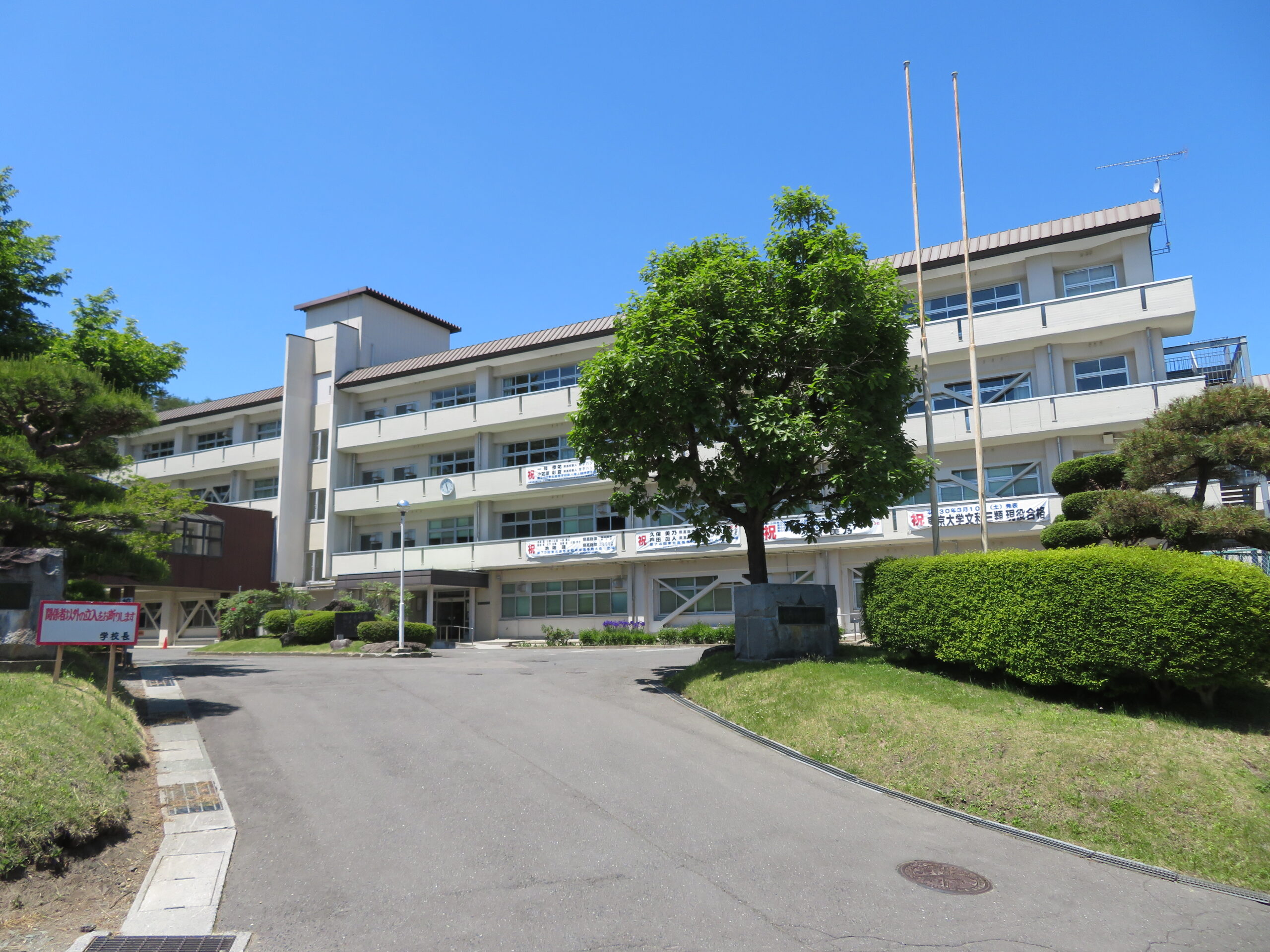
Karumai High School
Strong visual matchThe gate, school buildings and connecting walkway are among the most recognizable real-world views in Karumai for Haikyu!! fans.
What to notice
Do not treat the school like a set to enter. The experience is in recognizing the proportions from public space: the gate, the long school façade and the way the buildings sit on the hill.
The other stops that complete the walk
Karumai’s strongest pilgrimage experience is not one single “official model.” It is the concentration of locally associated scenery that feels familiar when you move through the town in sequence.
Tsudoi no Hiroba
A fan-run welcome space filled with messages, memorabilia and long-running local pilgrimage culture.
Tatesaka Electric
The local guide links this storefront with the television-shop imagery behind Hinata’s first spark of volleyball ambition.
Museum slope
The steep approach to the History & Folklore Museum resembles the running-route imagery around the volleyball club.
Karumai Junior High
View the school only from public space. The large stair approach is locally associated with training-camp scenery.
Karumai Town Gymnasium
The outdoor stairway is one of the clearest visual matches in town for the early Hinata–Kageyama rivalry.
Takesawa Store
A working supermarket with a long fan association. If you enter, shop normally and ask before photographing displays.
Yukiyagawa River / Showa Bridge
The local guide associates this riverbank with later Kuroo and Kenma imagery. It is a calmer place to finish before heading back to the bus.
Make Karumai Shokudo your lunch stop.
The route works better if lunch is planned, not improvised. Karumai Shokudo sits inside the central walking area. Current restaurant listings show lunch from 11:30, which fits the 10:32 weekday bus arrival well.
Karumai’s local pilgrimage guide connects the restaurant with the “Karasuno Shokudo” imagery and notes Haikyu-themed touches. Treat that as a bonus: the main reason to stop is that it gives you a proper local meal before the longer school-and-gym loop.
A route that fits the bus
This schedule is deliberately conservative. It leaves time to walk, eat, browse and recover from small navigation mistakes instead of turning the pilgrimage into a race.
or 17:51
Optional indoor stop: the History & Folklore Museum
The museum itself is not essential to the Haikyu!! route; the slope outside is the stronger visual connection. If you want local history as well, the museum is normally open April–November from 09:30 to 16:30, with last entry at 16:00. Admission is currently ¥150 for adults. It is closed Monday and Tuesday, with winter opening by reservation.
Finish the walking day at Kindaichi Onsen.
The clever part is the geography: Kindaichi Onsen sits on the same JR Bus Tohoku corridor between Karumai and Ninohe. On the weekday 16:46 bus from Ukamekan, you reach Kindaichi Onsen-go at 17:15 instead of riding straight back to Ninohe.
Kadar Terrace Kindaichi is the easiest evening bath option. Its current day-use schedule runs until 22:00, with final entry at 21:00; Monday service starts at 14:00 unless Monday is a public holiday, while Tuesday–Sunday service starts at 10:30.
Holiday schedules and maintenance can change bath hours. Recheck before travel.
Where to stay for the pilgrimage
You do not have to stay overnight, but northern Iwate becomes much easier if you avoid combining the pilgrimage with a very long same-day journey from Tokyo. These are the two most useful bases for different travel styles.
If your priority is Haikyu!! atmosphere rather than a bookable affiliate option, fans strongly associate this Kindaichi Onsen ryokan with a lodging seen later in the story. Iwate Prefecture has also publicly referred to the inn having a “Haikyu!! room.” This guide does not label that connection as officially confirmed by the production.
Ryokufuso
A traditional Kindaichi Onsen stay known for local hot spring culture and the region’s zashiki-warashi legend. The ryokan’s official site says Kindaichi Onsen Station is about 1.5 km away, with advance pickup available for eligible afternoon arrivals when arranged by the previous day.
- Stay in the onsen area after the pilgrimage
- Local meals and hot spring
- Best if the overnight experience matters as much as transport efficiency
Ninohe City Hotel
A practical Ninohe base if you want to be close to the Karumai departure corridor. It is not beside the station: the hotel’s official site lists about five minutes by car, or roughly 5–7 minutes by local JR bus to Shimonakamachi, and it has a natural hot-spring bath.
- Short taxi or local-bus hop to Ninohe Station for the morning Karumai departure
- Natural hot-spring bath and sauna
- Useful for travelers arriving in Ninohe by Shinkansen the night before
Before you leave Ninohe
Rural service is limited. Screenshot or bookmark the official weekday/weekend pages before boarding.
You will use maps, translation and live information throughout the walk. If needed, see Life with Saki’s Japan eSIM comparison.
Small local shops and restaurants are not the place to assume every international card or mobile wallet will work.
What “real-life location” means in this guide
Karumai’s own local guide uses careful language: it describes places around town as scenery that looks closely like backgrounds in the manga. This article follows the same standard. Strong Visual Match means a place has a clear resemblance and a strong public association; Fan-Associated Location means the connection is popular among fans but not treated here as an officially confirmed model. “Looks like” is not the same as “officially confirmed.”
Travel manners matter here
For shops and fan displays, behave like a normal customer first. Ask before taking indoor photos, buy something if you browse a small business, and do not treat private or working spaces as a photo set. At roads and bridges, stay out of traffic and avoid blocking sidewalks.
Quick answers
Can I visit Karumai without a car?
Yes. JR Bus Tohoku connects Ninohe with Karumai, and the central pilgrimage route can be walked. The main constraint is the limited bus timetable.
What is the best day for the full route?
Wednesday through Friday is the easiest combination of the useful weekday bus, Karumai Shokudo being open, and the museum/gym schedule. Always check current closures before travel.
Can I enter Karumai High School?
No. Karumai’s local guide explicitly asks visitors to remain outside the school grounds and view the buildings without disturbing students.
How long should I allow?
About six to seven hours in Karumai is comfortable for the main walking route, lunch and some browsing. A fast checklist is possible, but it misses the point of the town.
Is the famous scenery officially confirmed as the anime model?
Not every location is. This guide uses confidence labels and follows the local guide’s cautious wording rather than presenting fan associations as official facts.
Can I add an onsen after the pilgrimage?
Yes. Kindaichi Onsen is on the same JR bus corridor back toward Ninohe, and the 16:46 weekday bus from Ukamekan reaches Kindaichi Onsen-go at 17:15.
Final thought
The best moment in Karumai may not be the exact match you came to photograph.
It may be the walk between the school and the gym, the quiet street outside a small shop, or the river at the end of the afternoon — when the town stops feeling like a list of Haikyu!! locations and starts feeling like a real place you were glad the series led you to.
Heading to the Tokyo area too? Continue with our SLAM DUNK pilgrimage in Kamakura and Shonan.