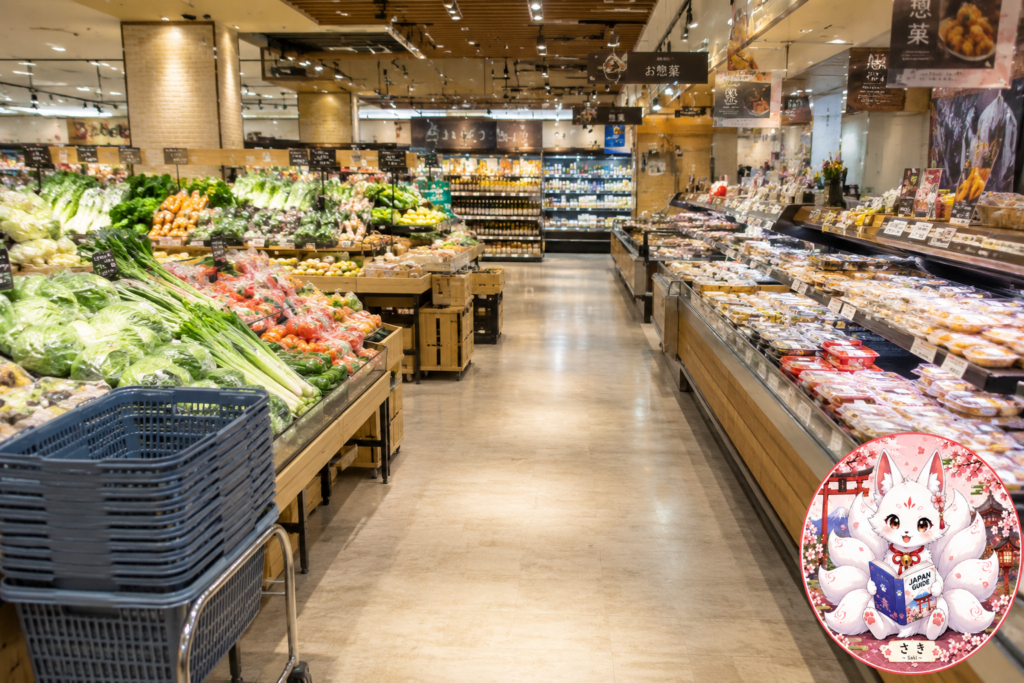
Japanese supermarkets offer affordable meals, fresh food, drinks, and everyday supplies for travelers and new residents.
The basic process is familiar: take a basket, choose your items, pay, and pack your purchases. The details can be less obvious, especially when a price is shown per 100 grams, the checkout accepts only certain payment methods, or the store expects you to pack your own bag.
How Shopping at a Japanese Supermarket Works
- Take a shopping basket or cart if the store provides one.
- Choose your groceries and check the shelf label or package price.
- Join a staffed, semi-self, or self-checkout line that accepts your payment method.
- Pay for your items and collect your receipt.
- Move to the packing area if the store has one, pack your purchases, and return the basket or cart to the marked area.
Baskets are often enough for a small trip, while a cart is helpful for heavy drinks or a larger shop. Cart styles and rules vary, so follow the signs rather than assuming every store uses the same system. Some chains also sell reusable baskets that can be taken home after checkout.
Understanding the Store Layout
Many supermarkets have separate areas for produce, meat, seafood, prepared foods, chilled products, frozen foods, packaged groceries, beverages, and household supplies. Prepared-food sections may include bento boxes, sushi, fried foods, salads, and side dishes. Larger stores may carry clothing, cookware, cosmetics, or pharmacy items, while a compact urban store may focus mainly on food.
There is no standard order for these departments. Follow the overhead signs or ask a staff member if you cannot find something. For quick meals and a different range of services, see our guide to how to use a Japanese convenience store.
Reading Prices and Product Amounts
Prices shown to consumers must include a tax-inclusive total, although a store may show a pre-tax price alongside the tax-inclusive total. Look for the final amount marked 税込, meaning tax included. 本体価格 or 税抜 indicates a price before tax.
As of July 27, 2026, most food and nonalcoholic drinks sold for takeout are generally subject to the reduced 8% consumption-tax rate. Alcohol, household goods, and meals treated as dining in are generally subject to the standard 10% rate. Check the displayed total because a supermarket basket can contain items from both categories.
Fresh products may be sold by the item, bag, package, or weight. Meat and seafood labels may show both a price per 100 grams and the total price for that package. Produce may be priced per piece or per bag. Match the shelf label to the exact product and read the package’s final price before placing it in your basket.
Discount Stickers
Some supermarkets reduce the price of prepared foods or other products as their best-before or use-by dates approach. A sticker may show a percentage discount, a fixed amount off, or a replacement price. Check the sticker carefully and confirm the charged price on the checkout screen or receipt.
Discount timing is not a nationwide rule. It depends on the store, product, remaining stock, and operating schedule. Food does not automatically become half price before closing, so plan your shopping around what you need rather than an expected markdown.
Checkout Options
Staffed and Semi-Self Checkout
At a staffed checkout, an employee scans the products and handles the payment process. At a semi-self checkout, an employee may scan your items and then direct you to a separate payment machine. Watch the display, take your receipt, and make sure you collect any change or card before moving away.
Full Self-Checkout and Scan-as-You-Shop
At a full self-checkout, you scan and pay for the items yourself. Scan each barcode once, place the item where the machine instructs, and call an attendant if a barcode will not read. Some chains also offer systems that let customers scan products with a store device or app while shopping and complete payment at a dedicated station.
Not every self-checkout has an English interface, and some machines are cashless while others accept cash. Alcohol, produce without a barcode, and some other items may require staff assistance. If the process is unclear, use the help button or choose a staffed register.
Payment Methods
Cash remains a useful option, but many supermarkets also accept some combination of credit cards, electronic money, QR code payments, and other mobile payment methods. The exact choices can differ by chain, location, sales area, product, and register. A payment accepted at the main grocery checkout may not be accepted by a tenant or at a cashless-only machine.
Check the payment logos before joining a line. A displayed card network does not guarantee that every foreign-issued card will be approved, so keep another payment method available. If you need yen, our guide to withdrawing cash in Japan with a foreign card explains where to look and what to check.
Shopping Bags and Packing Your Purchases
Stores must charge for plastic shopping bags covered by Japan’s bag rules. Bring a reusable bag or tell the cashier that you need to buy a bag. Sizes, prices, and materials vary by store.
The small handle-free plastic bags found near produce or packing areas are treated differently from handled shopping bags and may be available for items that could leak. Use them only as needed.
Many supermarkets have a packing area after checkout, usually with tables where customers bag their own purchases. Move your paid items there and pack heavier, sturdy products first. Keep eggs, bread, sushi, and soft prepared foods near the top, and separate raw meat or fish if a suitable small bag is available. Packing arrangements differ, and some checkout systems allow a reusable bag to be placed in the basket before payment.
Chopsticks, Spoons, Ice, and Dry Ice
Chopsticks, spoons, and other utensils may be offered for suitable prepared foods, but the process depends on the product and store. They may be handed out at the register, placed in a self-service area, sold, or unavailable. Ask before leaving if you need one.
Ice packs, ice, or dry ice for frozen products also vary by location. A store may provide them free, charge a fee, limit the amount, or not offer them. If you have a long trip home, bring an insulated bag or ask what cooling options are available before paying.
Point Cards and Store Apps
Point cards and apps are optional. They can provide points, digital coupons, or shopping lists, but their rules differ by chain. Some coupons must be activated or scanned before payment, and some products or services do not earn points.
A short-term visitor does not need to register simply to shop. For a new resident who uses the same chain regularly, compare the registration requirements, expiration rules, and benefits before joining.
Tax-Free Shopping
Tax-free shopping is available only at authorized stores and for eligible travelers, goods, and purchase amounts. Not every supermarket participates, and a participating location may handle the procedure at a service counter rather than a regular checkout. Check the store’s tax-free sign and current requirements before shopping.
As of July 27, 2026, Japan is scheduled to introduce a refund-based tax-free system on November 1, 2026. Under the new system, eligible shoppers pay the tax-inclusive price first and may receive a refund after completing the required departure procedure. Procedures are time-sensitive, so confirm the latest official rules and the store’s process close to your visit.
Useful Japanese Phrases
| What you want to say | Japanese | Romaji |
|---|---|---|
| I do not need a bag. | 袋はいりません。 | Fukuro wa irimasen. |
| Can I use this card? | このカードは使えますか? | Kono kado wa tsukaemasu ka? |
| How much is this? | これはいくらですか? | Kore wa ikura desu ka? |
| Chopsticks, please. | 箸をお願いします。 | Hashi o onegaishimasu. |
| A receipt, please. | レシートをお願いします。 | Reshito o onegaishimasu. |
Common Mistakes to Avoid
- Picking up a nearby product that does not match the shelf label you read.
- Confusing a per-100-gram price with the total package price.
- Missing an item while scanning at a self-checkout.
- Joining a cashless-only line before checking the accepted payments.
- Walking away from the register without the card, change, or receipt.
- Blocking the checkout while packing when a separate packing table is provided.
- Assuming every store follows the same discount schedule.
Beginner Checklist
- Basket or cart returned to the correct area
- Tax-inclusive and total package prices checked
- Checkout type and payment method confirmed
- Every item scanned and paid for
- Shopping bag purchased or reusable bag ready
- Utensils or cooling supplies requested if needed
- Receipt, card, cash, and purchases collected
Summary
Shopping at a Japanese supermarket is manageable once you know where to check the price, which register to use, and where to pack. Take your time with unfamiliar labels, confirm the accepted payment before checkout, and ask for help when a machine or service is unclear.
The most important point is that stores are not identical. Layouts, discounts, checkout systems, payment methods, bags, utensils, cooling services, points, and tax-free procedures can all vary. Follow the signs in front of you, and you can shop confidently without needing to memorize every possible rule.